Mini Cart

Introduction

Industrial aur commercial RO plants me membrane sabse important component hoti hai. RO membrane hi water se dissolved salts, impurities aur contaminants ko remove karti hai. Lekin agar membrane ki proper care aur maintenance na ki jaye, toh membrane jaldi damage ho sakti hai.

Membrane replacement ka cost kaafi high hota hai, isliye industries aur plant operators hamesha membrane life increase karne par focus karte hain. Proper maintenance, correct chemical use aur accurate dosing se RO membrane ki performance aur lifespan dono improve ki ja sakti hain.

Is blog me hum detail me samjhenge ki RO plant membrane life kaise increase karein aur kaun-kaun si important practices follow karni chahiye.


RO Membrane Kya Hoti Hai?

RO membrane ek semi-permeable membrane hoti hai jo high-pressure filtration process ke through dissolved impurities aur salts ko remove karti hai.

RO process ko simple equation se samjha ja sakta hai:

Yahan:

  • J = Water flux
  • A = Membrane permeability
  • ΔP = Applied pressure
  • Δπ = Osmotic pressure

Agar membrane dirty ya scaled ho jaye toh water flux reduce ho jata hai aur RO efficiency affect hoti hai.
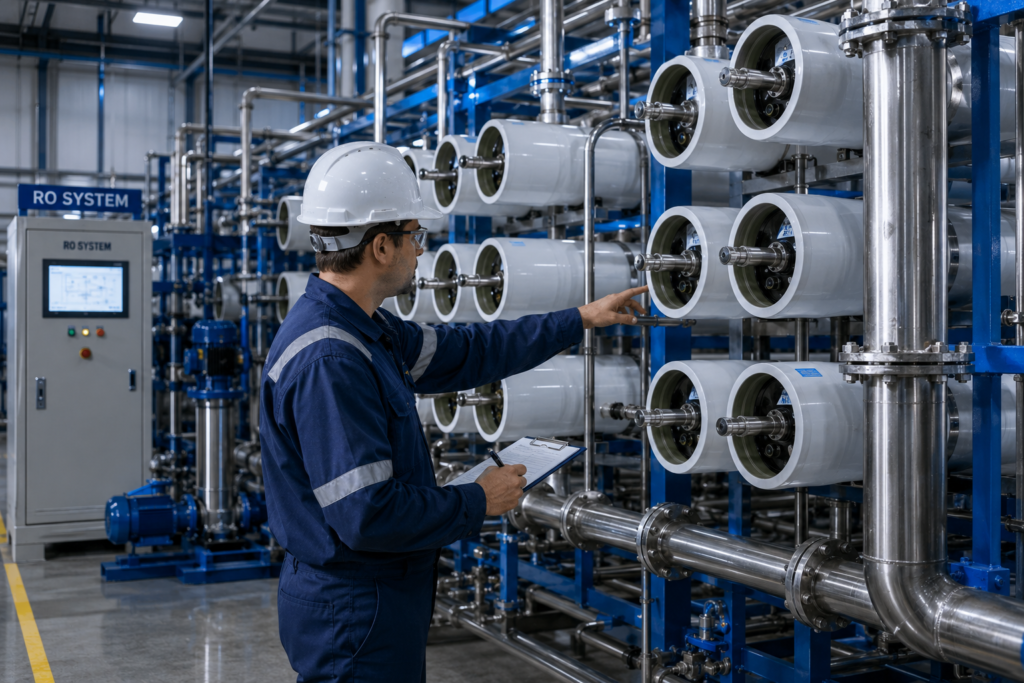
Clean Membranes

1. Proper Pre-Treatment Bahut Important Hai

RO plant ka pre-treatment membrane protection ka first step hota hai.

Pre-treatment systems:

  • Sand Filter
  • Carbon Filter
  • Water Softener
  • Micron Cartridge Filter

ye sab impurities aur hardness reduce karte hain.

Agar untreated hard water directly membrane par jaye toh scaling quickly develop ho jati hai.


2. Water Softener Use Karein

Hard water RO membrane ke liye sabse dangerous hota hai.

Calcium aur magnesium deposits membrane surface par scale create karte hain jisse:

  • Flow reduce hota hai
  • Pressure increase hota hai
  • Membrane damage hoti hai

Water softener hardness remove karke membrane protection provide karta hai.


3. Anti-Scalant Chemical Dosing

Anti-scalant chemicals membrane scaling ko prevent karte hain.

Ye chemicals calcium aur mineral deposits ko membrane surface par jamne se rokte hain.

Anti-scalant dosing:

  • Controlled quantity me honi chahiye
  • Feed water quality ke according set honi chahiye

Improper dosing se scaling ya chemical fouling dono ho sakte hain.


4. Chlorine Control Bahut Zaroori Hai

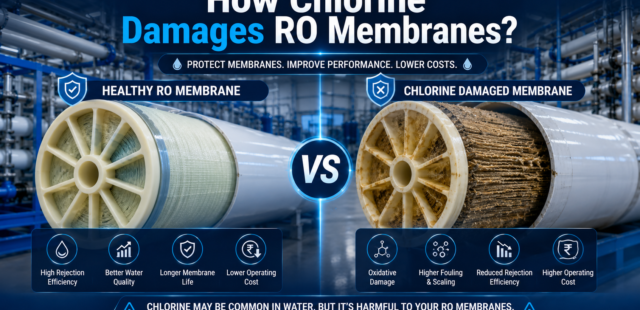
RO membranes chlorine-sensitive hoti hain.

Excess chlorine membrane layer ko permanently damage kar sakta hai.

Chlorine removal ke liye:

  • Activated carbon filter
  • Sodium bisulfite dosing

commonly use ki jati hai.

Chlorine neutralization reaction ko simple form me is equation se samjha ja sakta hai:

Proper chlorine control membrane life significantly improve karta hai.


5. Regular Membrane Cleaning

Time ke saath membrane surface par:

  • Scale
  • Organic fouling
  • Biofouling
  • Dirt particles

collect hone lagte hain.

Isliye regular CIP (Clean-In-Place) cleaning bahut important hoti hai.


Membrane Cleaning Me Kaunse Chemicals Use Hote Hain?

Acid Cleaner

Calcium scaling remove karne ke liye use hota hai.


Alkaline Cleaner

Organic fouling aur oil contamination remove karta hai.


Biocide Chemicals

Bacterial growth aur biofouling control karte hain.


6. Correct Operating Pressure Maintain Karein

RO plant me excessive pressure membrane damage ka reason ban sakta hai.

Low pressure:

  • Poor water recovery

High pressure:

  • Membrane stress
  • Membrane tearing risk

Proper pressure monitoring membrane safety ke liye important hota hai.


7. Feed Water Quality Regular Check Karein

Feed water parameters regularly monitor karne chahiye:

  • TDS
  • Hardness
  • pH
  • Chlorine level
  • SDI (Silt Density Index)

Poor feed water directly membrane performance affect karta hai.


8. Cartridge Filters Regular Replace Karein

Micron cartridge filters dirt particles ko membrane tak pahunchne se rokte hain.

Dirty cartridge filters:

  • Pressure drop create karte hain
  • Membrane fouling increase karte hain

Timely replacement membrane protection ke liye important hota hai.


9. Biofouling Control Karein

Bacteria aur algae membrane surface par slimy layer bana dete hain.

Isse:

  • Water flow reduce hota hai
  • Pressure increase hota hai
  • Membrane cleaning frequency badhti hai

Proper sanitization aur biocide treatment biofouling control karta hai.


10. Plant Shutdown Procedure Follow Karein

Agar RO plant long time ke liye shutdown ho:

  • Membranes dry nahi honi chahiye
  • Preservative chemicals use karne chahiye
  • Stagnant water avoid karna chahiye

Proper shutdown maintenance membrane life increase karta hai.

Membrane Performance Kaise Monitor Karein?

Important indicators:

  • Permeate flow reduction
  • Pressure increase
  • Salt rejection decrease
  • High conductivity

Agar ye symptoms dikhein toh membrane cleaning ya inspection required hoti hai.


RO Membrane Life Normally Kitni Hoti Hai?

Proper maintenance ke saath industrial RO membranes generally:

  • 2–5 years

tak efficiently work kar sakti hain.

Poor maintenance membrane life ko bahut reduce kar deta hai.


Conclusion

RO membrane industrial water treatment systems ka heart hoti hai. Proper maintenance, chemical dosing aur pre-treatment systems membrane protection ke liye bahut important hote hain.

Anti-scalant dosing, chlorine control, regular cleaning aur feed water monitoring se membrane life significantly increase ki ja sakti hai. Properly maintained membranes better water quality, lower maintenance cost aur higher plant efficiency provide karti hain.

Frequently Asked Questions (FAQs)

1. RO membrane ki life kitni hoti hai?

Proper maintenance ke saath RO membrane 2–5 years tak chal sakti hai.


2. Membrane scaling kya hota hai?

Calcium aur mineral deposits membrane surface par jam jate hain jise scaling kaha jata hai.


3. Anti-scalant chemical ka role kya hai?

Ye membrane par scaling formation ko prevent karta hai.


4. Kya chlorine RO membrane ko damage karta hai?

Haan, excess chlorine membrane layer ko permanently damage kar sakta hai.


5. RO membrane cleaning kitni baar karni chahiye?

Plant condition aur feed water quality ke according periodic CIP cleaning karni chahiye.


6. Water softener membrane protection me kaise help karta hai?

Water softener hardness remove karke membrane scaling reduce karta hai.


7. Cartridge filter replacement important kyun hai?

Dirty cartridge filters membrane fouling aur pressure drop create karte hain.


8. Biofouling kya hota hai?

Bacteria aur algae membrane surface par slimy contamination create karte hain.


9. RO membrane damage ke symptoms kya hain?

Low water flow, high pressure aur poor salt rejection membrane damage ke signs hote hain.


10. Proper chemical dosing kyun important hai?

Correct dosing membrane scaling, fouling aur chemical damage ko prevent karti hai.
Introduction

Water treatment industry me disinfection sabse important process hota hai. Chahe drinking water plant ho, swimming pool ho, industrial RO system ho ya wastewater treatment plant — harmful bacteria aur microorganisms ko remove karna bahut zaroori hota hai. Isi purpose ke liye ek commonly used chemical hai Sodium Hypochlorite.

Sodium Hypochlorite water treatment me ek powerful disinfectant ke roop me use hota hai jo water ko germs aur harmful microorganisms se safe banata hai. Is blog me hum detail me samjhenge ki Sodium Hypochlorite kya hota hai, water treatment me iska role kya hai aur industries isse kyun use karti hain.


Sodium Hypochlorite Kya Hota Hai?

Sodium Hypochlorite ek chemical compound hai jo commonly liquid chlorine ke naam se bhi jana jata hai.

Iska chemical formula hota hai:

NaOClNaOCl

Ye generally pale yellow liquid form me available hota hai aur strong disinfectant properties rakhta hai.

Water treatment plants me Sodium Hypochlorite ka use bacteria, viruses aur algae ko destroy karne ke liye kiya jata hai.

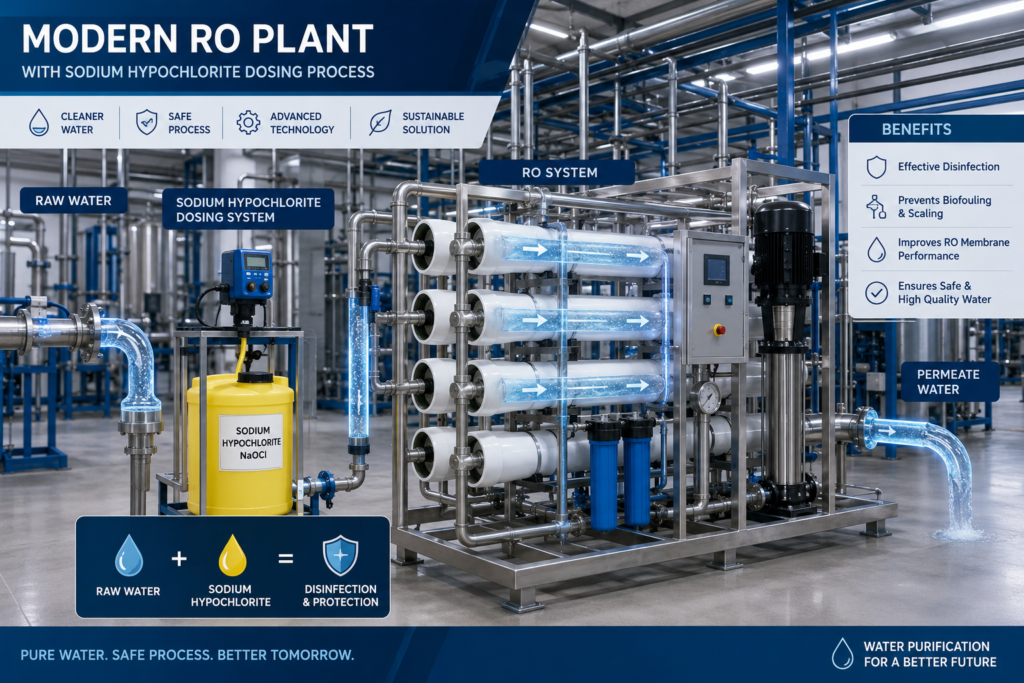
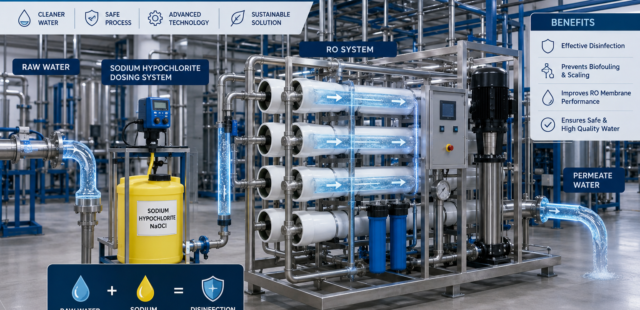
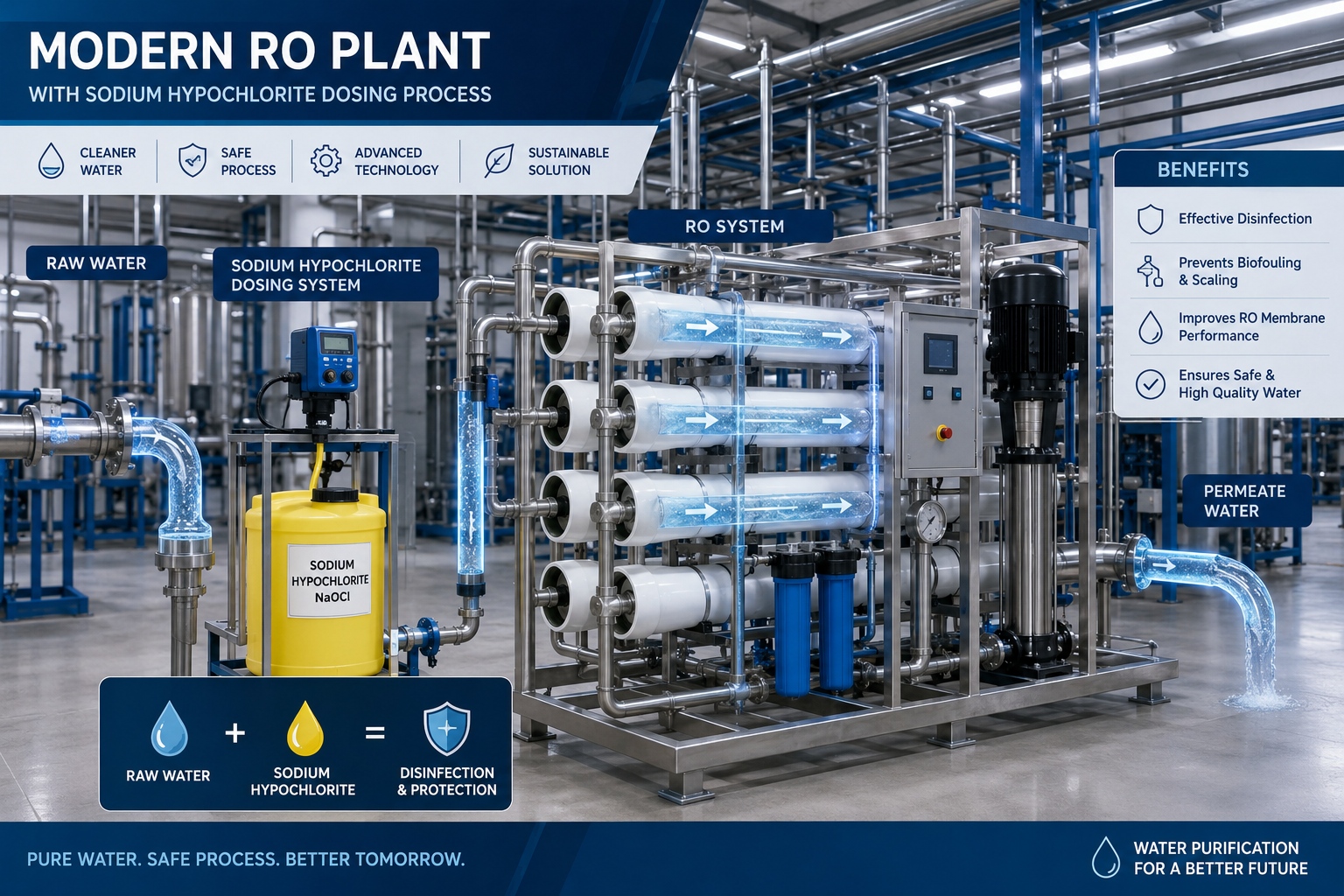
Modern industrial RO plant with sodium hypochlorite chemical dosing System

Water Treatment Me Sodium Hypochlorite Kaise Kaam Karta Hai?

Jab Sodium Hypochlorite water me mix hota hai, toh ye hypochlorous acid produce karta hai jo microorganisms ko kill karta hai.

Reaction ko simple form me is equation se samjha ja sakta hai:

NaOCl+H2O→HOCl+NaOHNaOCl + H_2O \rightarrow HOCl + NaOH

Yahan:

  • HOCl (Hypochlorous Acid) = Main disinfecting agent
  • NaOH = Sodium Hydroxide

Hypochlorous acid bacteria aur viruses ke cell walls ko damage karke unhe inactive kar deta hai.


Sodium Hypochlorite Water Treatment Me Kyun Important Hai?

Water me harmful microorganisms health risks create kar sakte hain. Sodium Hypochlorite effectively:

  • Bacteria remove karta hai
  • Viruses destroy karta hai
  • Algae growth control karta hai
  • Water odor reduce karta hai
  • Water ko hygienic banata hai

Isi wajah se ye municipal aur industrial water treatment systems me widely use hota hai.


Sodium Hypochlorite Ke Major Applications

1. Drinking Water Disinfection

Municipal drinking water plants me Sodium Hypochlorite water ko disinfect karne ke liye use hota hai.

Ye:

  • Waterborne diseases prevent karta hai
  • Germs ko kill karta hai
  • Safe drinking water ensure karta hai

2. Industrial RO Plants

Industrial RO systems me biological fouling ek common problem hoti hai.

Sodium Hypochlorite:

  • Bacterial growth control karta hai
  • Pipeline sanitization me help karta hai
  • Pre-treatment disinfection provide karta hai

Lekin RO membrane ke saath controlled dosing bahut important hoti hai kyunki excess chlorine membrane damage kar sakta hai.


3. Swimming Pool Water Treatment

Swimming pools me water continuously disinfect karna zaroori hota hai.

Sodium Hypochlorite:

  • Water clarity maintain karta hai
  • Germs aur algae ko control karta hai
  • Pool hygiene improve karta hai

4. Wastewater Treatment

Wastewater plants me treated water ko discharge karne se pehle disinfect kiya jata hai.

Sodium Hypochlorite harmful pathogens ko remove karke environmental safety improve karta hai.


5. Food & Beverage Industry

Food processing plants me hygiene maintain karna bahut important hota hai.

Sodium Hypochlorite:

  • Equipment sanitization
  • Surface cleaning
  • Water disinfection

me use hota hai.

Sodium Hypochlorite Ke Benefits

Strong Disinfectant

Ye bacteria aur viruses ke against highly effective hota hai.


Easy To Use

Liquid form me hone ki wajah se dosing aur handling comparatively easy hoti hai.


Cost-Effective Solution

Large-scale water treatment ke liye economical disinfectant mana jata hai.


Fast Action

Microorganisms ko quickly destroy karta hai.


Odor Control

Bad smell aur organic contamination ko reduce karta hai.


Sodium Hypochlorite Use Karte Time Precautions

Ye ek strong chemical hai, isliye proper handling bahut important hoti hai.

Safety Precautions

  • Gloves aur goggles use karein
  • Proper ventilation maintain karein
  • Direct skin contact avoid karein
  • Sunlight se door store karein
  • Correct dosing maintain karein

Improper handling se irritation aur chemical hazards ho sakte hain.


Excess Sodium Hypochlorite Ke Nuksan

Agar excessive quantity use ki jaye toh:

  • Water me chlorine smell aa sakti hai
  • RO membranes damage ho sakte hain
  • Water taste affect ho sakta hai
  • Corrosion risk increase ho sakta hai

Isi liye accurate dosing systems use karna important hota hai.

Sodium Hypochlorite Aur Chlorine Me Difference

Bahut log Sodium Hypochlorite aur chlorine gas ko same samajhte hain, lekin dono alag forms hain.

Sodium HypochloriteChlorine Gas
Liquid formGas form
Easy handlingHigh safety risk
Common industrial useLarge municipal systems
Safer storageSpecialized handling required

Industrial Water Treatment Me Iska Importance

Industries me microbial contamination production aur equipment dono ko affect kar sakta hai.

Sodium Hypochlorite:

  • Hygiene maintain karta hai
  • Biofouling reduce karta hai
  • Equipment protection me help karta hai
  • Water quality improve karta hai

Isi wajah se ye industrial water treatment ka important part mana jata hai.


Conclusion

Sodium Hypochlorite water treatment industry me ek highly effective disinfectant hai jo bacteria, viruses aur harmful microorganisms ko control karne me help karta hai. Drinking water plants se lekar industrial RO systems aur wastewater treatment tak iska use bahut common hai.

Proper dosing aur safe handling ke saath Sodium Hypochlorite water quality improve karta hai aur hygienic treatment process maintain karne me important role play karta hai.

Frequently Asked Questions (FAQs)

1. Sodium Hypochlorite kya hota hai?

Ye ek liquid disinfectant chemical hai jo water treatment me germs aur bacteria remove karne ke liye use hota hai.


2. Sodium Hypochlorite ka chemical formula kya hai?

Iska chemical formula NaOCl hota hai.


3. Water treatment me Sodium Hypochlorite ka main role kya hai?

Ye water disinfection aur microbial control ke liye use hota hai.


4. Kya Sodium Hypochlorite drinking water me use hota hai?

Haan, controlled quantity me municipal drinking water treatment plants me use hota hai.


5. Kya Sodium Hypochlorite RO membranes ko affect karta hai?

Excess chlorine RO membranes ko damage kar sakta hai, isliye proper dosing important hoti hai.


6. Sodium Hypochlorite aur bleach same hote hain?

Household bleach me bhi Sodium Hypochlorite present hota hai, lekin industrial grades alag concentration me available hote hain.


7. Kya Sodium Hypochlorite algae control karta hai?

Haan, ye algae aur bacterial growth dono ko effectively control karta hai.


8. Sodium Hypochlorite ko safely kaise handle karein?

Gloves, goggles aur proper ventilation ke saath ise handle karna chahiye.


9. Kya Sodium Hypochlorite odor remove karta hai?

Haan, ye water me bad odor aur organic contamination ko reduce karne me help karta hai.


10. Sodium Hypochlorite kahan-kahan use hota hai?

Drinking water plants, swimming pools, RO plants, wastewater treatment aur food industries me iska use hota hai.

Introduction

Aaj ke time me water jars aur bottled drinking water ka use homes, offices, shops aur industries me bahut common ho gaya hai. Lekin kai baar log notice karte hain ki water jar kholte hi ek ajeeb smell ya bad odor aati hai. Ye smell kabhi plastic jaisi hoti hai, kabhi fungus jaisi aur kabhi stale water jaisi.

Agar water jar me smell aa rahi hai, toh ise ignore nahi karna chahiye kyunki ye contamination, poor cleaning ya storage issues ka sign ho sakta hai. Is blog me hum detail me samjhenge ki water jar me smell kyu aati hai, iske reasons kya hote hain aur ise kaise prevent kiya ja sakta hai.

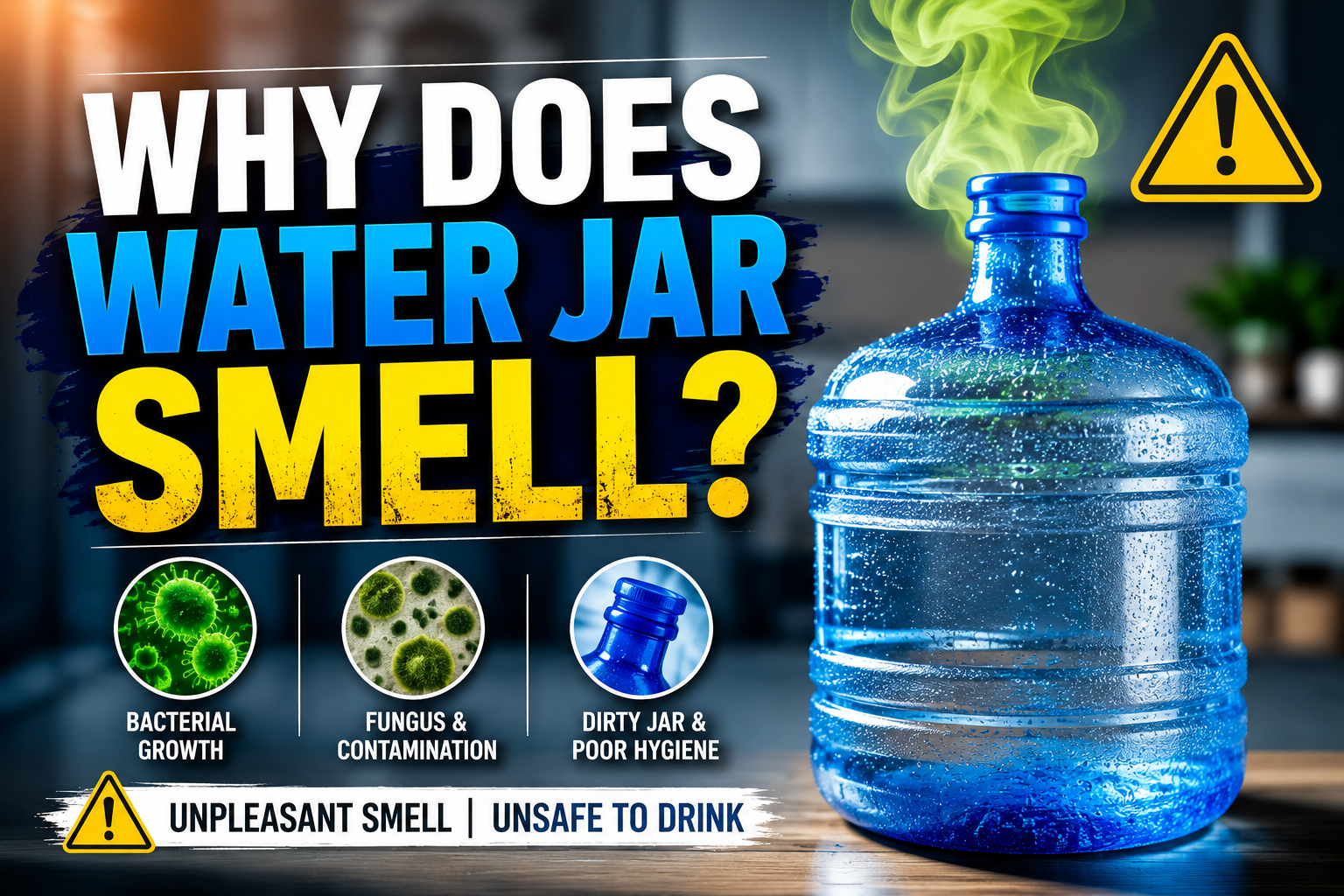
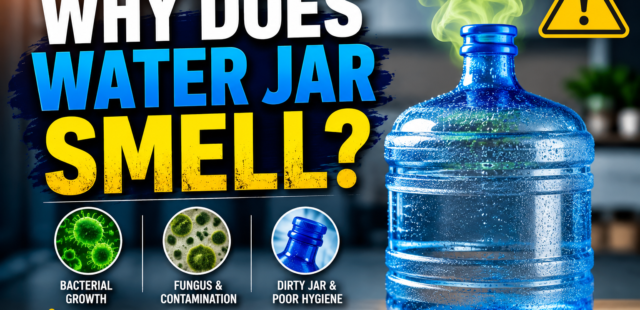
Why does water jar smell

Water Jar Me Smell Aane Ke Common Reasons

1. Proper Cleaning Na Hona

Water jars ko regular aur proper cleaning ki zarurat hoti hai. Agar jars ko achhe se wash aur sanitize na kiya jaye, toh unke andar bacteria aur fungus grow hone lagte hain.

Ye microbial growth water me unpleasant smell create karti hai.

Common smells:

  • Fungus smell
  • Bad odor
  • Stale smell
  • Muddy smell

Isi liye commercial jar washing process me proper cleaning chemicals aur sanitization bahut important hota hai.


2. Bacterial Growth

Agar water jar long time tak closed condition me pada rahe ya sunlight aur heat ke contact me aaye, toh bacteria rapidly grow kar sakte hain.

Bacterial contamination ko simple growth concept se samjha ja sakta hai:

N(t)=N0ertN(t)=N_0e^{rt}

Yahan:

  • N(t) = Time ke saath bacteria count
  • N₀ = Initial bacteria quantity
  • r = Growth rate

Warm temperature bacterial growth ko fast kar deta hai jisse smell aur water quality issues create hote hain.


3. Plastic Material Ki Smell

Kai low-quality jars me plastic quality achhi nahi hoti. Jab jar sunlight ya high temperature me expose hota hai, toh plastic chemicals smell release kar sakte hain.

Ye smell:

  • Plastic jaisi
  • Chemical type
  • Synthetic odor

ho sakti hai.

Food-grade jars use karna bahut important hota hai.


4. Improper Storage Conditions

Water jars ko agar:

  • Direct sunlight me rakha jaye
  • Dusty environment me store kiya jaye
  • High temperature area me rakha jaye

toh water quality quickly affect ho sakti hai.

Heat aur moisture microbial growth ko increase karte hain jisse bad smell develop hoti hai.


5. Cap Aur Neck Area Dirty Hona

Kai baar problem water me nahi, jar ke cap ya neck area me hoti hai.

Cap area par:

  • Dust
  • Germs
  • Fungus
  • Handling contamination

collect ho jata hai.

Jab jar open hota hai toh wahi smell water me feel hone lagti hai.


6. Poor Jar Washing Process

Commercial water suppliers agar proper jar washing system use nahi karte, toh jars completely clean nahi ho pate.

Professional jar cleaning process me generally:

  • Outer washing
  • Inner washing
  • Chemical cleaning
  • Hot water sanitization
  • Germicide treatment

include hota hai.

Improper washing directly odor issues ka reason ban sakta hai.


7. Old Ya Damaged Water Jars

Old jars ke andar scratches aur cracks develop ho jaate hain jahan bacteria easily accumulate ho sakte hain.

Damaged jars:

  • Properly clean nahi hote
  • Odor retain karte hain
  • Contamination risk badhate hain

Isliye jars ko timely replace karna important hota hai.


8. Water Source Contamination

Kabhi-kabhi smell ka actual reason water source hi hota hai.

Agar raw water me:

  • Sulfur compounds
  • Organic impurities
  • Algae contamination
  • High bacterial load

ho, toh treated water me bhi smell aa sakti hai.

Industrial RO aur UV systems ka proper maintenance bahut important hota hai.

Water Jar Smell Ko Kaise Prevent Karein?

Regular Sanitization

Water jars ko proper disinfectant aur food-grade cleaning chemicals se regularly clean karna chahiye.


Food-Grade Jars Use Karein

High-quality BPA-free aur food-grade jars use karne chahiye.


Sunlight Se Door Rakhein

Water jars ko cool aur shaded place me store karna best hota hai.


Proper Jar Washing Machines Use Karein

Commercial suppliers ko automatic jar washing machines aur sanitization systems use karne chahiye.


Timely Jar Replacement

Damaged aur old jars ko replace karna contamination prevention ke liye important hai.


Water Smell Health Ke Liye Dangerous Ho Sakti Hai?

Agar smell bacterial contamination ki wajah se hai, toh contaminated water health issues create kar sakta hai.

Possible issues:

  • Stomach infection
  • Vomiting
  • Bad taste
  • Digestive problems

Agar water me unusual smell aaye toh usse consume karne se pehle check karna chahiye.


Commercial Water Plants Ko Kya Dhyan Rakhna Chahiye?

Water jar businesses ko:

  • Proper cleaning process maintain karna chahiye
  • Germicide use karna chahiye
  • RO & UV systems maintain karne chahiye
  • Food-grade jars use karne chahiye
  • Regular quality testing karni chahiye

Ye sab customer trust aur water quality maintain karne ke liye important hai.


Conclusion

Water jar me smell aana ek common problem hai lekin ise ignore nahi karna chahiye. Iske main reasons poor cleaning, bacterial growth, low-quality plastic, improper storage aur contaminated water source ho sakte hain.

Proper sanitization, high-quality jars aur professional water treatment systems use karke odor problems ko easily control kiya ja sakta hai. Safe aur fresh drinking water provide karne ke liye regular maintenance aur hygiene maintain karna bahut important hai.

Frequently Asked Questions (FAQs)

1. Water jar me bad smell kyun aati hai?

Bad smell ka main reason bacterial growth, poor cleaning ya improper storage conditions hote hain.


2. Kya plastic jar ki quality smell ko affect karti hai?

Haan, low-quality plastic jars heat me chemical smell release kar sakte hain.


3. Kya smelly water health ke liye harmful ho sakta hai?

Agar smell contamination ki wajah se ho toh contaminated water health issues create kar sakta hai.


4. Water jars ko kitni baar clean karna chahiye?

Commercial water jars ko har refill cycle me properly wash aur sanitize karna chahiye.


5. Water jar smell prevent kaise karein?

Proper cleaning, sanitization, food-grade jars aur cool storage conditions maintain karke smell prevent ki ja sakti hai.


6. Kya sunlight water jars ko affect karti hai?

Haan, direct sunlight bacterial growth aur plastic odor dono increase kar sakti hai.


7. Commercial jar washing me kya use hota hai?

Professional washing process me cleaning chemicals, hot water aur germicide sanitization use hota hai.


8. Old jars smell kyun retain karte hain?

Old jars me scratches aur cracks develop ho jaate hain jahan bacteria accumulate ho jate hain.


9. Kya RO water me bhi smell aa sakti hai?

Haan, agar jar cleaning ya storage proper na ho toh RO water me bhi smell develop ho sakti hai.


10. Safe drinking water maintain karne ke liye kya important hai?

Proper hygiene, regular cleaning aur professional water treatment systems maintain karna sabse important hai.

Industrial RO (Reverse Osmosis) plants aaj almost har industry me use hote hain — chahe pharmaceutical ho, food processing, textile, boiler feed ya drinking water treatment. Lekin RO plants me sabse common aur costly problem hoti hai scaling. Agar scaling ko time par control na kiya jaye, to membrane damage, low water production aur high maintenance cost jaisi problems create ho jati hain.

Is blog me hum detail me samjhenge ki industrial RO plant me scaling kya hoti hai, iska permanent solution kya hai aur kaise aap apne RO system ki performance aur membrane life improve kar sakte hain.


RO Scaling Kya Hoti Hai?

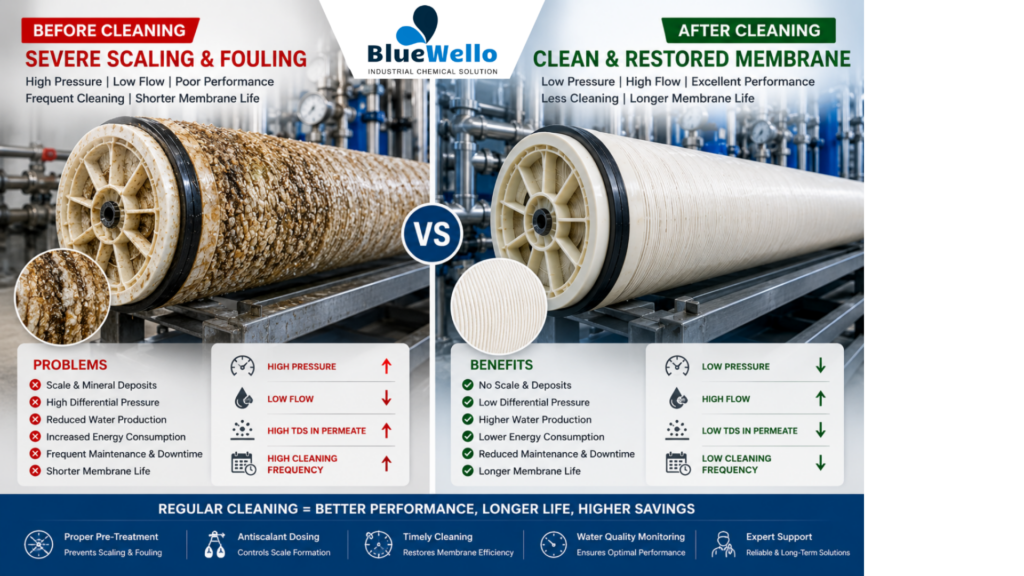
Scaling ek process hai jisme dissolved minerals aur salts membrane surface par jamne lagte hain. Ye deposits dheere-dheere hard layer bana dete hain jo membrane ke pores block kar dete hain.

Sabse common scaling compounds:

  • Calcium Carbonate
  • Calcium Sulfate
  • Magnesium Hydroxide
  • Silica
  • Iron Deposits

Jab feed water me hardness aur dissolved minerals zyada hote hain, tab scaling ka risk bhi kaafi increase ho jata hai.

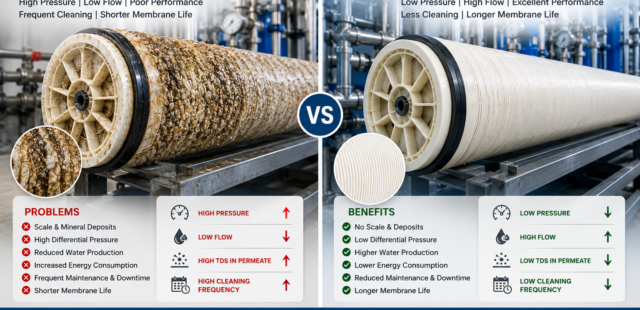
Dirty Membrane VS Clean Membrane

Industrial RO Plant Me Scaling Ke Signs

Agar aapke RO system me niche diye gaye symptoms dikh rahe hain, to scaling problem ho sakti hai:

1. Water Production Kam Ho Jana

Permeate flow gradually reduce hone lagta hai.

2. Operating Pressure Badhna

System ko same output ke liye zyada pressure lagana padta hai.

3. TDS Rejection Kam Ho Jana

Output water quality affect hone lagti hai.

4. Energy Consumption Increase

Pumps par extra load aata hai jisse electricity bill badhta hai.

5. Frequent Membrane Cleaning

Agar baar-baar cleaning karni pad rahi hai, to scaling continuously build ho rahi hai.


Scaling Problem Ka Main Reason

Industrial RO plants me scaling usually improper pre-treatment ki wajah se hoti hai. Agar feed water properly treat nahi hota, to minerals directly membrane surface par deposit hone lagte hain.

Common causes:

  • High hardness water
  • Improper antiscalant dosing
  • pH imbalance
  • Poor pretreatment system
  • Iron contamination
  • High recovery rate operation

Industrial RO Scaling Ka Permanent Solution

Scaling ka permanent solution sirf ek chemical use karna nahi hai. Iske liye proper system approach follow karna padta hai.


1. Proper Pretreatment System Install Karein

RO membrane ko protect karne ke liye pretreatment sabse important step hai.

Recommended Pretreatment:

  • Sand Filter → suspended particles remove karta hai
  • Activated Carbon Filter → chlorine aur organics remove karta hai
  • Water Softener → hardness reduce karta hai
  • Micron Cartridge Filter → fine particles stop karta hai

Agar pretreatment strong hoga, to scaling ka risk automatically kam ho jayega.


2. High Quality Antiscalant Use Karein

Antiscalant chemicals dissolved salts ko crystal form me convert hone se rokte hain.

Antiscalant Ke Benefits:

  • Calcium scaling prevent karta hai
  • Silica deposition control karta hai
  • Membrane cleaning frequency reduce karta hai
  • Recovery rate improve karta hai

Industrial RO systems me proper dosing bahut important hoti hai. Overdosing aur underdosing dono harmful ho sakte hain.


3. Feed Water Analysis Regularly Karwayein

Water chemistry time ke saath change hoti rehti hai. Isliye regular testing bahut zaroori hai.

Important Parameters:

  • Hardness
  • TDS
  • Silica
  • Iron
  • pH
  • Conductivity

Agar feed water ka proper analysis hoga, to scaling ka prediction aur prevention dono easy ho jata hai.


4. RO Membrane Cleaning Time Par Karein

Scaling ko completely avoid karna possible nahi hota. Lekin timely cleaning se membrane damage prevent kiya ja sakta hai.

Acidic Cleaning Kab Use Karein?

pH<7pH < 7

Acidic cleaners mineral scaling remove karne ke liye use hote hain. Ye calcium, magnesium aur iron deposits dissolve karte hain.

Acidic Cleaning Effective Hai:

  • Calcium carbonate scaling
  • Metal oxides
  • Salt deposits

5. Alkaline Cleaning Biofouling Ko Control Karti Hai

pH>7pH > 7

Agar membrane par organic fouling, algae ya bacteria deposits hain, to alkaline cleaning use ki jati hai.

Alkaline Cleaning Effective Hai:

  • Biofouling
  • Oil & grease
  • Organic contamination

Acidic aur alkaline cleaning ka combination membrane performance ko restore karne me kaafi effective hota hai.


6. Recovery Rate Proper Maintain Karein

Bahut high recovery rate chalane se concentrate side me salts ka concentration increase ho jata hai, jisse scaling fast develop hoti hai.

Recommended recovery system design aur feed water quality ke according maintain karni chahiye.


7. Automated Monitoring System Use Karein

Modern industrial RO plants me automation scaling prevention me bahut help karta hai.

Monitoring Parameters:

  • Pressure drop
  • Flow rate
  • Conductivity
  • pH
  • ORP

Real-time monitoring se scaling issue early stage me identify kiya ja sakta hai.

Kya Membrane Replacement Permanent Solution Hai?

Bahut log scaling hone par directly membrane replace kar dete hain. Lekin agar root cause solve nahi kiya gaya, to new membrane bhi quickly scale ho jayegi.

Isliye permanent solution membrane replacement nahi, balki:

  • Proper pretreatment
  • Correct chemical dosing
  • Timely cleaning
  • Water analysis
  • System optimization

hai.


Scaling Prevention Ke Benefits

Agar industrial RO plant me scaling properly control ho jaye, to:

  • Membrane life increase hoti hai
  • Water production stable rehta hai
  • Energy consumption reduce hota hai
  • Maintenance cost kam hoti hai
  • Plant downtime reduce hota hai
  • Water quality improve hoti hai

Conclusion

Industrial RO plant me scaling ek serious issue hai, lekin proper strategy ke saath ise effectively control kiya ja sakta hai. Pretreatment system, antiscalant dosing, regular monitoring aur timely membrane cleaning scaling prevention ke key factors hain.

Agar aap long-term stable performance chahte hain, to sirf temporary cleaning nahi balki complete preventive maintenance approach adopt karni hogi. Yehi industrial RO scaling problem ka real permanent solution hai.

FAQs – Industrial RO Plant Scaling Problem

1. Industrial RO plant me scaling kyu hoti hai?

Scaling mainly high hardness, dissolved salts, silica aur improper pretreatment ki wajah se hoti hai. Jab minerals membrane surface par deposit hone lagte hain, tab scaling develop hoti hai.

2. RO membrane scaling ka sabse common sign kya hai?

Sabse common signs hain:

  • Water flow kam ho jana
  • Operating pressure increase hona
  • TDS rejection reduce hona
  • Energy consumption badhna

3. Kya antiscalant scaling ko completely stop kar deta hai?

Antiscalant scaling ko kaafi had tak prevent karta hai, lekin proper dosing aur pretreatment ke bina complete protection possible nahi hoti.

4. RO membrane cleaning kitni baar karni chahiye?

Industrial RO plants me normally 1–3 months ke andar cleaning recommended hoti hai, depending on feed water quality aur plant load.

5. Acidic cleaning aur alkaline cleaning me kya difference hai?

  • Acidic cleaning → mineral scaling remove karti hai
  • Alkaline cleaning → organic fouling aur biofouling remove karti hai

6. Kya water softener scaling prevention me help karta hai?

Haan, water softener hardness reduce karta hai jisse calcium aur magnesium scaling ka risk kam hota hai.

7. High recovery rate scaling ko kaise affect karta hai?

Bahut high recovery rate salts concentration increase karta hai, jisse scaling rapidly develop hoti hai.

8. Kya membrane replacement permanent solution hai?

Nahi. Agar root cause solve nahi hua to new membrane bhi jaldi scale ho jayegi. Proper pretreatment aur maintenance hi permanent solution hai.

9. Silica scaling ko remove karna difficult kyu hota hai?

Silica deposits bahut hard aur stubborn hote hain, isliye unke liye specialized antiscalants aur cleaning chemicals use kiye jate hain.

10. Scaling prevention se kya benefits milte hain?

  • Longer membrane life
  • Lower maintenance cost
  • Better water quality
  • Stable plant performance
  • Reduced downtime

RO (Reverse Osmosis) system ka sabse important part uski membrane hoti hai. Ye membrane paani me maujood dissolved salts, impurities, bacteria aur harmful particles ko filter karti hai. Lekin time ke saath membrane par scaling, fouling aur organic deposits jamne lagte hain, jiski wajah se system ki performance dheere-dheere kam ho jaati hai. Isi liye regular RO membrane cleaning bahut zaroori hoti hai.

RO Membrane Cleaning Ki Zarurat Kab Padti Hai?

Agar aap industrial RO plant, commercial RO system ya water treatment unit use karte hain, to kuch clear signs hote hain jo batate hain ki membrane cleaning ka time aa gaya hai.

1. Water Flow Kam Ho Jana

Agar purified water ka production pehle se kam ho gaya hai, to membrane clog ho sakti hai. Deposits membrane ke pores block kar dete hain jisse flow reduce ho jata hai.

2. TDS Rejection Kam Ho Jana

RO membrane ka kaam dissolved solids ko remove karna hota hai. Agar output water ka TDS level badhne lage, to membrane ki efficiency kam ho rahi hoti hai.

3. Operating Pressure Badhna

System ko same amount ka water produce karne ke liye zyada pressure lag raha ho, to iska matlab membrane par scaling ya fouling jam gaya hai.

4. Frequent Shutdown Ya High Energy Consumption

Dirty membrane ki wajah se pumps par extra load padta hai. Isse electricity consumption badh jati hai aur maintenance cost bhi increase hoti hai.

5. Membrane Differential Pressure Increase

Agar inlet aur outlet pressure ka difference bahut zyada ho raha hai, to membrane cleaning immediately karni chahiye.

RO Membrane Fouling Ke Common Reasons

RO membranes normally chaar major problems ki wajah se dirty hoti hain:

  • Scale formation (calcium, magnesium deposits)
  • Organic fouling
  • Biofouling (bacteria aur algae growth)
  • Iron aur metal deposits

Har type ke fouling ko remove karne ke liye alag cleaning chemical aur method use hota hai. Yahin par acidic aur alkaline cleaning ka role aata hai.

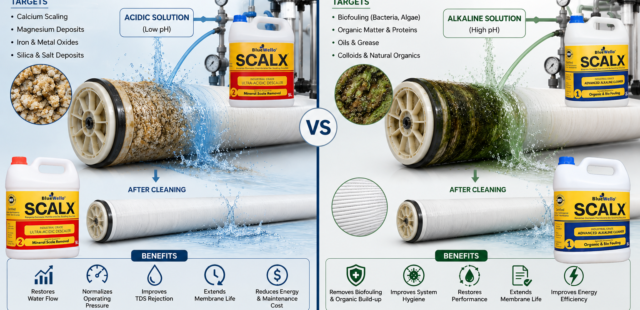
Acid VS Alkaline Cleaning

Acidic Cleaning Kya Hoti Hai?

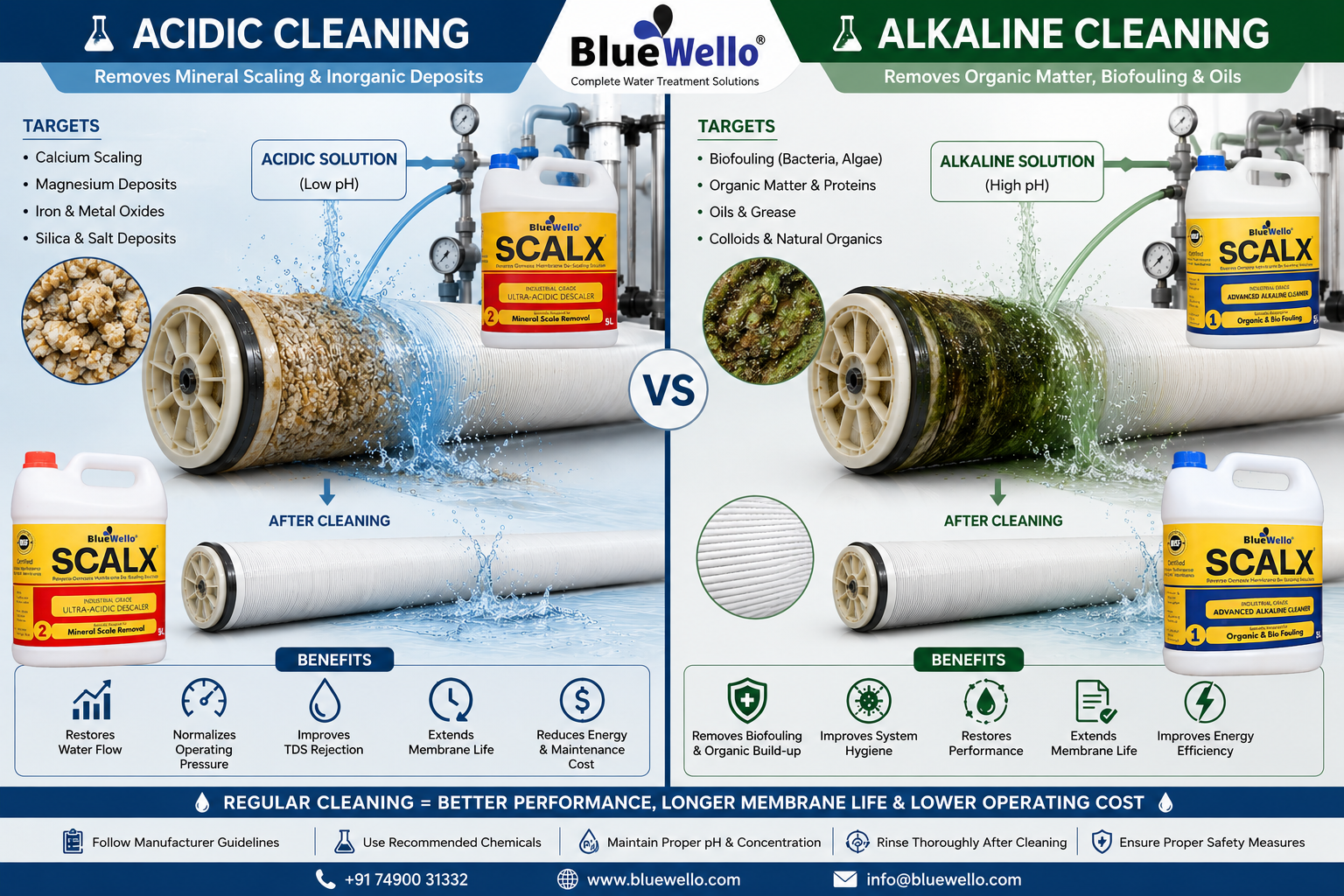
Acidic cleaning ka use inorganic scaling remove karne ke liye kiya jata hai. Jab membrane par calcium carbonate, metal oxides ya mineral deposits jam jate hain, tab acid-based chemicals effective hote hain.

Acidic Cleaning Kis Situation Me Use Hoti Hai?

  • Calcium scaling
  • Magnesium deposits
  • Iron fouling
  • Silica related deposits (light level)
  • High mineral scaling

Common Acidic Chemicals

  • Citric Acid
  • Hydrochloric Acid (HCl)
  • Sulfuric Acid
  • Phosphoric Acid

Industrial applications me generally mild acids prefer kiye jate hain taaki membrane damage na ho.

Acidic Cleaning Ka Benefit

  • Mineral deposits quickly dissolve ho jate hain
  • Water flow improve hota hai
  • Pressure normalize ho jata hai
  • Membrane efficiency restore hoti hai

Important Precautions

Acidic cleaning ka pH bahut low hota hai. Agar concentration zyada ho ya cleaning time improper ho, to membrane permanently damage ho sakti hai. Isliye manufacturer guidelines follow karna zaroori hai.

Alkaline Cleaning Kya Hoti Hai?

Alkaline cleaning ka use organic fouling aur biological contamination remove karne ke liye hota hai. Jab membrane par oil, grease, bacteria, algae ya protein deposits jamte hain, tab alkaline cleaners effective rehte hain.

Alkaline Cleaning Kis Situation Me Use Hoti Hai?

  • Biofouling
  • Organic matter deposits
  • Oil aur grease contamination
  • Protein fouling
  • Algae buildup

Common Alkaline Chemicals

  • Sodium Hydroxide (Caustic Soda)
  • Sodium Tripolyphosphate
  • EDTA based cleaners
  • Detergent-based membrane cleaners

Alkaline Cleaning Ke Benefits

  • Organic deposits effectively remove hote hain
  • Bacteria growth control hoti hai
  • Membrane life improve hoti hai
  • System sanitation better hota hai

Important Precautions

High alkaline concentration membrane surface ko affect kar sakta hai. Cleaning ke baad proper flushing bahut important hoti hai taaki chemical residue system me na rahe.

Acidic vs Alkaline Cleaning – Kya Difference Hai?

ParameterAcidic CleaningAlkaline Cleaning
Main PurposeMineral scaling remove karnaOrganic aur biofouling remove karna
pH LevelLow pHHigh pH
Effective AgainstCalcium, iron, saltsOil, grease, bacteria
Common ChemicalsCitric acid, HClCaustic soda, detergents
Use FrequencyScaling hone parOrganic fouling hone par

Simple words me samjhein to:

  • Agar membrane par “salt aur mineral deposits” hain → Acidic cleaning.
  • Agar membrane par “organic ya biological dirt” hai → Alkaline cleaning.

Kai cases me dono cleaning sequentially bhi ki jati hain for complete membrane restoration.


RO Membrane Cleaning Kitni Baar Karni Chahiye?

Cleaning frequency water quality aur plant usage par depend karti hai.

General Recommendation:

  • Commercial RO systems: 3–6 months
  • Industrial RO plants: 1–3 months
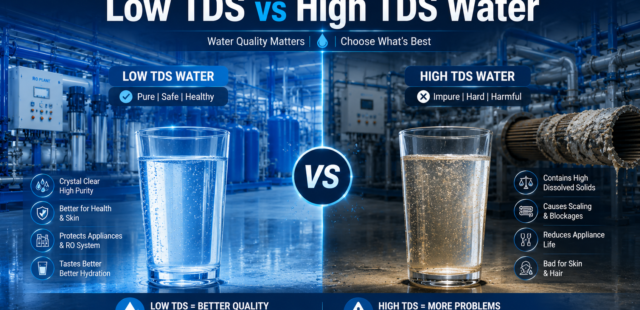
  • High TDS water areas: More frequent cleaning

Agar pre-treatment system proper ho (sand filter, carbon filter, antiscalant dosing), to membrane life aur cleaning interval dono improve ho jate hain.


Conclusion

RO membrane cleaning ko ignore karna long-term me costly mistake ban sakta hai. Time par cleaning karne se membrane life badhti hai, water quality maintain rehti hai aur energy consumption bhi kam hota hai.

Acidic cleaning mainly mineral scaling ke liye use hoti hai, jabki alkaline cleaning organic aur biological fouling remove karne ke liye best hoti hai. Dono cleaning methods ka correct use RO system ki efficiency maintain karne ke liye bahut important hai.

Agar aap regular monitoring aur timely maintenance karte hain, to aapka RO plant better performance aur longer lifespan ke saath smoothly kaam karega.

FAQs – RO Membrane Cleaning Se Jude Common Questions

1. RO membrane cleaning kitni baar karni chahiye?

Ye completely water quality aur system usage par depend karta hai. Normally industrial RO plants me 1–3 months aur commercial systems me 3–6 months ke andar cleaning recommend ki jati hai.

2. Kaise pata chalega ki RO membrane dirty ho gayi hai?

Agar water flow kam ho raha ho, TDS increase ho raha ho, pressure zyada aa raha ho ya electricity consumption badh gaya ho, to membrane cleaning ki zarurat ho sakti hai.

3. Acidic cleaning aur alkaline cleaning me kya difference hai?

Acidic cleaning mineral scaling remove karti hai, jabki alkaline cleaning organic fouling aur bacteria deposits remove karti hai.

4. Kya RO membrane cleaning ghar par ki ja sakti hai?

Small domestic RO systems me basic cleaning possible hoti hai, lekin industrial aur commercial plants ke liye trained technician ki help lena better hota hai.

5. Agar membrane cleaning time par na ho to kya hoga?

System efficiency kam ho jayegi, water quality affect hogi, pressure aur energy consumption badh jayega aur membrane jaldi damage ho sakti hai.

6. Kya acidic cleaning membrane ko damage kar sakti hai?

Haan, agar acid concentration zyada ho ya incorrect chemical use kiya jaye to membrane permanently damage ho sakti hai. Isliye proper pH aur manufacturer guidelines follow karni chahiye.

7. Alkaline cleaning kis type ke fouling ke liye best hai?

Ye biofouling, oil, grease, algae aur organic deposits remove karne ke liye sabse effective hoti hai.

8. Membrane ki life kaise increase ki ja sakti hai?

Regular maintenance, proper pre-treatment, antiscalant dosing aur timely cleaning se membrane ki life kaafi improve hoti hai.