Mini Cart

Water treatment industry me “DM Water” ek bahot common term hai. Lekin bahot log abhi bhi confuse hote hain ki DM Water actually hota kya hai aur iska use kaha hota hai.

Kya DM Water normal water se different hota hai?
Kya DM Water drinking ke liye safe hota hai?
Aur industries isko itna important kyu maanti hain?

Agar aap bhi ye sab samajhna chahte hain, toh ye blog aapke liye hai.

Is article me hum simple Hinglish me jaanenge:

  • DM Water kya hota hai
  • DM Water kaise banta hai
  • Iske uses kya hain
  • Aur industries me iska importance kyu hai

DM Water Kya Hota Hai?

DM Water ka full form hota hai:

Demineralized Water

Naam se hi clear hai ki is water se minerals remove kar diye jate hain.

Normal water ke andar naturally different dissolved minerals aur salts present hote hain jaise:

  • calcium
  • magnesium
  • sodium
  • chloride
  • sulphates

DM process in dissolved minerals aur ions ko remove karta hai aur highly purified water produce karta hai.

Isi wajah se DM Water ko:

  • low conductivity water
  • mineral-free water
  • high purity water

bhi bola jata hai.

What is DM Water

DM Water Kaise Banta Hai?

DM Water generally Ion Exchange Process se banaya jata hai.

Is process me special resins use hote hain jo water ke andar present dissolved ions ko remove kar dete hain.

Usually DM plant me do main resin systems use hote hain:

1. Cation Resin

Ye positive ions remove karta hai jaise:

  • calcium
  • magnesium
  • sodium

2. Anion Resin

Ye negative ions remove karta hai jaise:

  • chloride
  • sulphate
  • nitrate

In dono processes ke baad highly purified DM Water milta hai.


DM Water Ki Important Characteristics

DM Water normal water se kaafi different hota hai.

DM Water Features:

✅ Very low conductivity
✅ Low dissolved salts
✅ High purity level
✅ Scale formation kam
✅ Industrial applications ke liye suitable

Isi wajah se industries me iska use bahot common hai.

DM Water Kaha Use Hota Hai?

DM Water ka use mainly industrial applications me hota hai jaha high purity water required hota hai.


1. Boiler Feed Water

Boilers me hard water use karne se scaling aur corrosion ho sakta hai.

DM Water:

  • scale formation reduce karta hai
  • boiler efficiency improve karta hai
  • maintenance cost kam karta hai

Isi liye boiler industry me DM water bahot important hota hai.


2. Pharmaceutical Industry

Medicines aur pharma manufacturing me water purity bahot critical hoti hai.

DM Water contamination risk reduce karne me help karta hai.


3. Laboratory Use

Labs me accurate testing aur experiments ke liye impurity-free water required hota hai.

Isliye laboratories me DM water commonly use hota hai.


4. Battery Industry

Battery manufacturing aur maintenance me bhi DM water ka use hota hai.

Mineral-free water battery performance improve karne me help karta hai.


5. Chemical Processing Plants

Kai industrial chemical processes me high purity water requirement hoti hai.

DM Water process efficiency aur product quality improve karta hai.

Kya DM Water Drinking Ke Liye Safe Hai?

Ye ek bahot common question hai.

Technically DM Water highly purified hota hai, lekin regular drinking purpose ke liye generally recommend nahi kiya jata.

Reason?
Kyuki DM process almost saare minerals remove kar deta hai.

Drinking water me controlled minerals hona important hota hai.

Isi liye normal drinking applications me RO water zyada commonly use hota hai.


DM Water Aur RO Water Me Difference

Bahot log DM Water aur RO Water ko same samajhte hain, lekin dono different hote hain.

RO Water:

  • membrane filtration use karta hai
  • TDS reduce karta hai
  • drinking applications me common hai

DM Water:

  • ion exchange process use karta hai
  • almost complete mineral removal karta hai
  • industrial high-purity applications me use hota hai

Kai industries me pehle RO aur fir DM treatment bhi use kiya jata hai better purification ke liye.


DM Plant Maintenance Kyu Important Hai?

Agar DM plant properly maintain na ho toh:

  • water purity affect ho sakti hai
  • resin efficiency reduce ho sakti hai
  • operating cost increase ho sakta hai

Isi liye:
✅ regular water testing
✅ resin maintenance
✅ proper regeneration
✅ quality treatment chemicals

bahot important hote hain.


Common Problems In DM Water Systems

1. High Conductivity

Generally exhausted resin ya improper regeneration ki wajah se hota hai.


2. Resin Fouling

Contaminated feed water resin performance ko affect kar sakta hai.


3. Scaling & Iron Fouling

Poor pre-treatment ki wajah se deposits develop ho sakte hain.

DM Water System Me Pre-Treatment Kyu Important Hai?

DM plant ke pehle proper pre-treatment hona bahot important hota hai.

Generally use hota hai:

  • sand filter
  • activated carbon filter
  • softener
  • RO system

Ye systems DM resin ko protect karte hain aur plant life improve karte hain.


Final Thoughts

DM Water ek highly purified water form hai jo industrial applications me bahot important role play karta hai.

Boilers, laboratories, pharma aur chemical industries me DM Water ka use better performance aur high purity maintain karne ke liye kiya jata hai.

Proper:
✅ pre-treatment
✅ maintenance
✅ water testing
✅ chemical treatment

ki help se DM plant efficiency aur water quality dono improve ki ja sakti hain.

Agar aap industrial water treatment aur DM plant solutions search kar rahe hain, toh Bluewello reliable water treatment solutions provide karta hai.

FAQ

Q1. DM Water ka full form kya hota hai?

DM Water ka full form Demineralized Water hota hai.

Q2. Kya DM Water aur RO Water same hote hain?

Nahi, dono purification methods aur applications different hote hain.

Q3. DM Water kaha use hota hai?

Boilers, laboratories, pharmaceuticals aur battery industries me commonly use hota hai.

Q4. Kya DM Water drinking ke liye suitable hai?

Generally regular drinking purpose ke liye recommend nahi kiya jata.

Q5. DM Water me minerals hote hain?

DM process me most dissolved minerals remove kar diye jate hain.

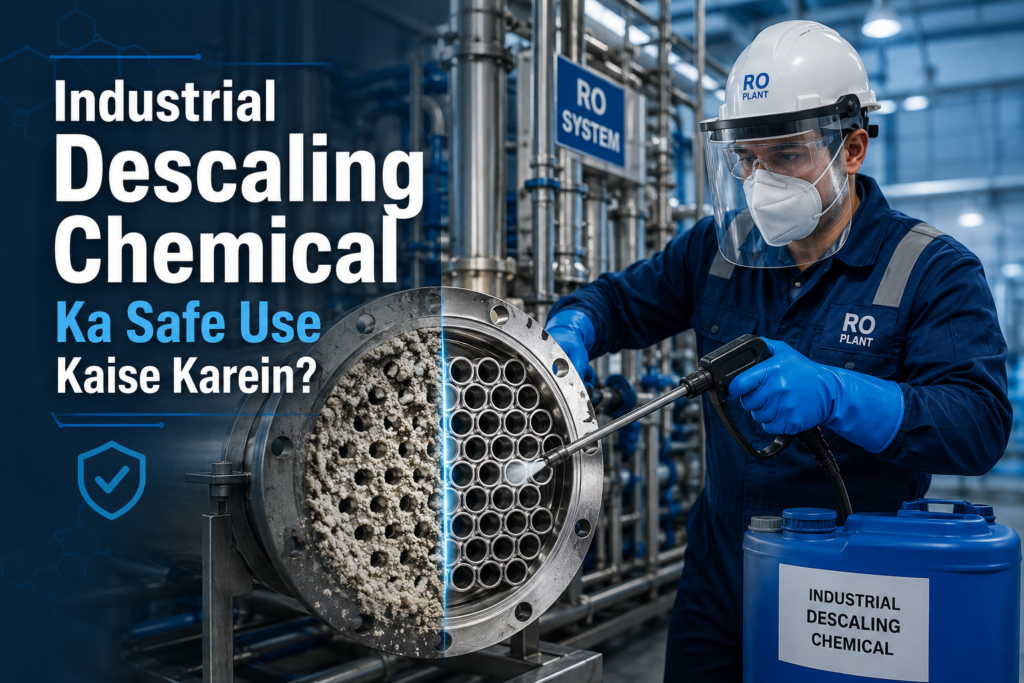
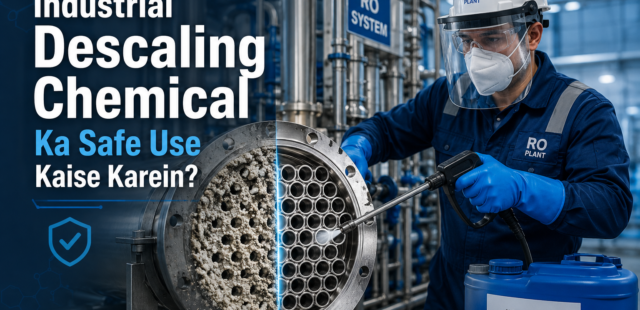
Water treatment industry me chemicals ka use bahot common hai. RO plants, cooling towers, boilers, packaged drinking water plants aur industrial water systems me different types ke chemicals daily use hote hain.

Lekin ek cheez jo bahot baar ignore kar di jati hai, wo hai:

Chemical handling safety.

Agar water treatment chemicals ko properly handle na kiya jaye, toh:

  • skin irritation
  • eye damage
  • breathing problems
  • chemical burns
  • equipment damage

jaise serious issues ho sakte hain.

Isi liye sirf quality chemicals use karna enough nahi hai — unko safely handle karna bhi equally important hai.

Is blog me hum simple Hinglish me jaanenge:

  • Water treatment chemicals handle karte time kya precautions leni chahiye
  • Common safety mistakes kya hoti hain
  • Aur industrial plants me proper chemical safety kaise maintain ki jati hai
Water Treatment Chemical Safety

Water Treatment Chemicals Dangerous Kyu Ho Sakte Hain?

Different water treatment chemicals ka nature alag hota hai.

Kuch chemicals:

  • acidic hote hain
  • alkaline hote hain
  • oxidizing nature ke hote hain
  • strong cleaning agents hote hain

Agar inka direct contact ho jaye toh ye:

  • skin ko damage kar sakte hain
  • eyes ko irritate kar sakte hain
  • harmful fumes release kar sakte hain

Isi liye proper handling aur storage bahot important hota hai.


1. Always Use Proper Safety Equipment (PPE)

Chemical handling ke time PPE (Personal Protective Equipment) use karna mandatory hona chahiye.

Recommended PPE:

✅ Safety gloves
✅ Safety goggles
✅ Face shield
✅ Chemical-resistant apron
✅ Safety shoes
✅ Mask ya respirator (agar fumes ho)

Bahot accidents sirf isliye hote hain kyuki workers proper safety gear use nahi karte.


2. Chemical Labels Aur Instructions Zarur Padhein

Bahot baar operators bina label padhe chemicals use karna start kar dete hain.

Ye dangerous ho sakta hai.

Chemical container par generally important information hoti hai:

  • usage instructions
  • dilution ratio
  • hazard warning
  • storage conditions
  • first aid instructions

Chemical use karne se pehle label aur SDS (Safety Data Sheet) properly check karna chahiye.


3. Chemicals Ko Direct Mix Na Karein

Different chemicals ko bina knowledge ke mix karna dangerous reactions create kar sakta hai.

Example:

  • acid + chlorine-based chemicals
  • incompatible cleaners
  • oxidizers + organic compounds

ye harmful gases aur heat generate kar sakte hain.

Important Rule:

Kabhi bhi unknown chemicals ko randomly mix na karein.


4. Proper Ventilation Maintain Karein

Kuch water treatment chemicals fumes release karte hain jo breathing problems create kar sakte hain.

Especially:

  • chlorine-based chemicals
  • strong acids
  • sanitizers

ko closed area me handle karna risky ho sakta hai.

Solution:

✅ Well-ventilated area use karein
✅ Exhaust fans install karein
✅ Closed rooms avoid karein


5. Chemical Dilution Carefully Karein

Concentrated chemicals ko directly use karna dangerous ho sakta hai.

Dilution karte time ek important rule follow kiya jata hai:

“Always add chemical to water, not water to chemical.”

Agar ulta kiya jaye toh splashing aur heat generation ka risk badh sakta hai.


6. Proper Chemical Storage Bahot Important Hai

Improper storage ki wajah se:

  • leakage
  • contamination
  • fire risk
  • chemical degradation

jaise issues ho sakte hain.

Safe Storage Tips:

✅ Cool aur dry place me store karein
✅ Direct sunlight avoid karein
✅ Containers tightly closed rakhein
✅ Acid aur alkaline chemicals separate rakhein
✅ Food area se door rakhein


7. Spill Management Ready Rakhein

Industrial plants me kabhi bhi accidental spills ho sakte hain.

Isliye:

  • absorbent material
  • neutralizing agents
  • emergency wash station
  • spill kit

ready hona chahiye.

Workers ko spill response training bhi deni chahiye.


8. Emergency First Aid Knowledge Zaruri Hai

Agar chemical accidentally:

  • skin par gir jaye
  • eyes me chala jaye
  • inhale ho jaye

toh immediate action lena bahot important hota hai.

Basic First Aid:

✅ Affected area ko clean water se wash karein
✅ Contaminated clothes remove karein
✅ Eyes ko continuously rinse karein
✅ Serious condition me doctor contact karein

Delay dangerous ho sakta hai.


9. Trained Staff Hi Chemicals Handle Kare

Untrained staff ko chemical handling dena risky ho sakta hai.

Operators ko:

  • chemical hazards
  • PPE usage
  • dilution procedure
  • emergency response

ki proper training milni chahiye.


10. Regular Safety Inspection Karein

Plant safety ek one-time activity nahi hoti.

Regularly check karein:
✅ leakage
✅ damaged containers
✅ expired chemicals
✅ PPE condition
✅ ventilation systems

Safety audits accidents prevent karne me help karte hain.

Common Mistakes Jo Avoid Karni Chahiye

❌ Bare Hands Se Chemicals Touch Karna

❌ Open Containers Chhodna

❌ Wrong Chemical Mixing

❌ PPE Ignore Karna

❌ Food Area Ke Paas Chemicals Store Karna

❌ Unlabeled Containers Use Karna

Ye mistakes serious accidents ka reason ban sakti hain.


Water Treatment Industry Me Safety Ka Importance

Aaj industries sirf performance nahi, safety standards par bhi focus kar rahi hain.

Proper chemical safety:

  • workers ko protect karti hai
  • equipment safety improve karti hai
  • contamination risk reduce karti hai
  • company reputation maintain karti hai

Isi liye safe chemical handling har industrial plant ka important part hona chahiye.


Final Thoughts

Water treatment chemicals industrial operations ke liye bahot important hote hain, lekin unko safely handle karna equally necessary hai.

Proper:
✅ PPE usage
✅ storage
✅ ventilation
✅ dilution
✅ staff training

ki help se accidents aur risks ko kaafi had tak reduce kiya ja sakta hai.

Agar aap reliable aur professional water treatment chemical solutions search kar rahe hain, toh Bluewello industrial water treatment applications ke liye effective chemical solutions provide karta hai.

FAQ

Q1. Water treatment chemicals handle karte time gloves zaruri hain?

Haan, safety gloves skin protection ke liye bahot important hote hain.

Q2. Kya different chemicals ko mix kar sakte hain?

Sirf proper technical guidance ke according hi chemicals mix karne chahiye.

Q3. Chemical fumes dangerous ho sakte hain?

Haan, kuch chemicals harmful fumes release kar sakte hain, isliye ventilation important hai.

Q4. Chemicals ko sunlight me store karna safe hai?

Nahi, direct sunlight chemicals ko damage ya unstable bana sakti hai.

Q5. Chemical spill hone par kya karna chahiye?

Immediately spill management procedure follow karein aur proper PPE use karein.

Aaj ke time me packaged drinking water industry bahot fast grow kar rahi hai. Har jagah 20 litre water jars ka use ho raha hai — offices, shops, factories, schools aur homes tak.

Lekin ek important question jo bahot log ignore kar dete hain:

“Kya water jars properly clean ho rahe hain?”

Agar jar cleaning proper na ho, toh:

  • bad smell develop ho sakti hai.
  • bacteria growth ho sakti hai.
  • water quality affect ho sakti hai.
  • customer complaints increase ho sakti hain.

Isi liye water jar cleaning sirf ek washing process nahi, balki hygiene aur brand reputation ka important part hai.

Is blog me hum simple Hinglish me samjhenge:

  • Water jars dirty kyu hote hain.
  • Proper jar cleaning process kya hota hai.
  • Kaunse chemicals use hote hain.
  • Aur packaged drinking water plants ko kin mistakes se bachna chahiye.
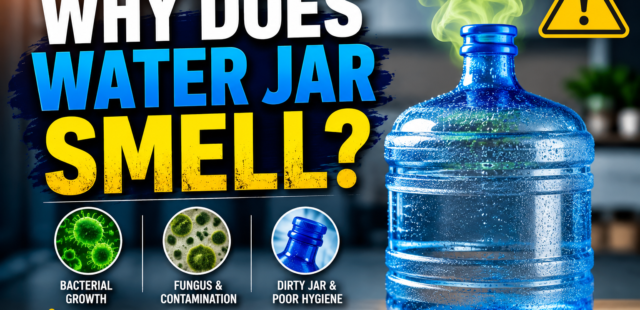
Water Jars

Water Jars Dirty Kyu Ho Jate Hain?

20 litre jars continuously reuse hote rehte hain. Har delivery cycle ke baad jars:

  • dust
  • algae
  • bacteria
  • oil marks
  • smell
  • scaling

jaise contaminants collect kar sakte hain.

Kabhi-kabhi customers jars ko direct sunlight me rakh dete hain, jisse algae growth aur odor problem aur badh jati hai.

Agar proper sanitization na ho, toh contamination drinking water tak pahunch sakti hai.


Proper Water Jar Cleaning Kyu Important Hai?

Agar jars properly clean nahi honge toh:

  • water ka taste affect ho sakta hai
  • foul smell aa sakti hai
  • customer trust down ho sakta hai
  • health risk increase ho sakta hai
  • food safety standards violate ho sakte hain

Packaged drinking water industry me hygiene maintain karna bahot important hota hai.

Water Jar Cleaning Ka Standard Process

Ek professional jar washing process generally multiple stages me hota hai.


1. Pre-Rinsing

Sabse pehle jars ko plain water se rinse kiya jata hai taki:

  • dust
  • loose dirt
  • visible particles

remove ho sakein.

Ye step main washing process ko effective banata hai.


2. Outer Surface Cleaning

Jar ka outer surface bhi equally important hota hai kyuki customer sabse pehle jar ka appearance hi notice karta hai.

Agar jar:

  • yellow lage
  • stains ho
  • greasy marks ho
  • dirty dikhe

toh customer ka trust instantly affect ho sakta hai.

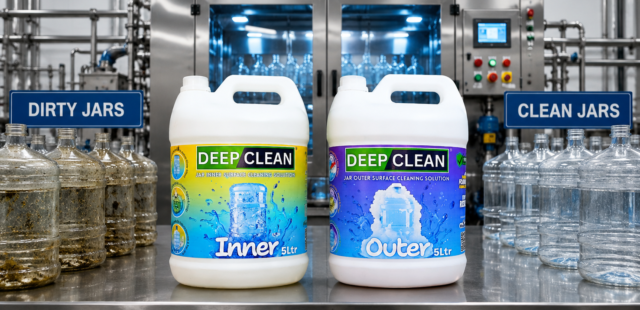
Professional cleaning ke liye specially formulated chemicals use kiye jate hain jaise:

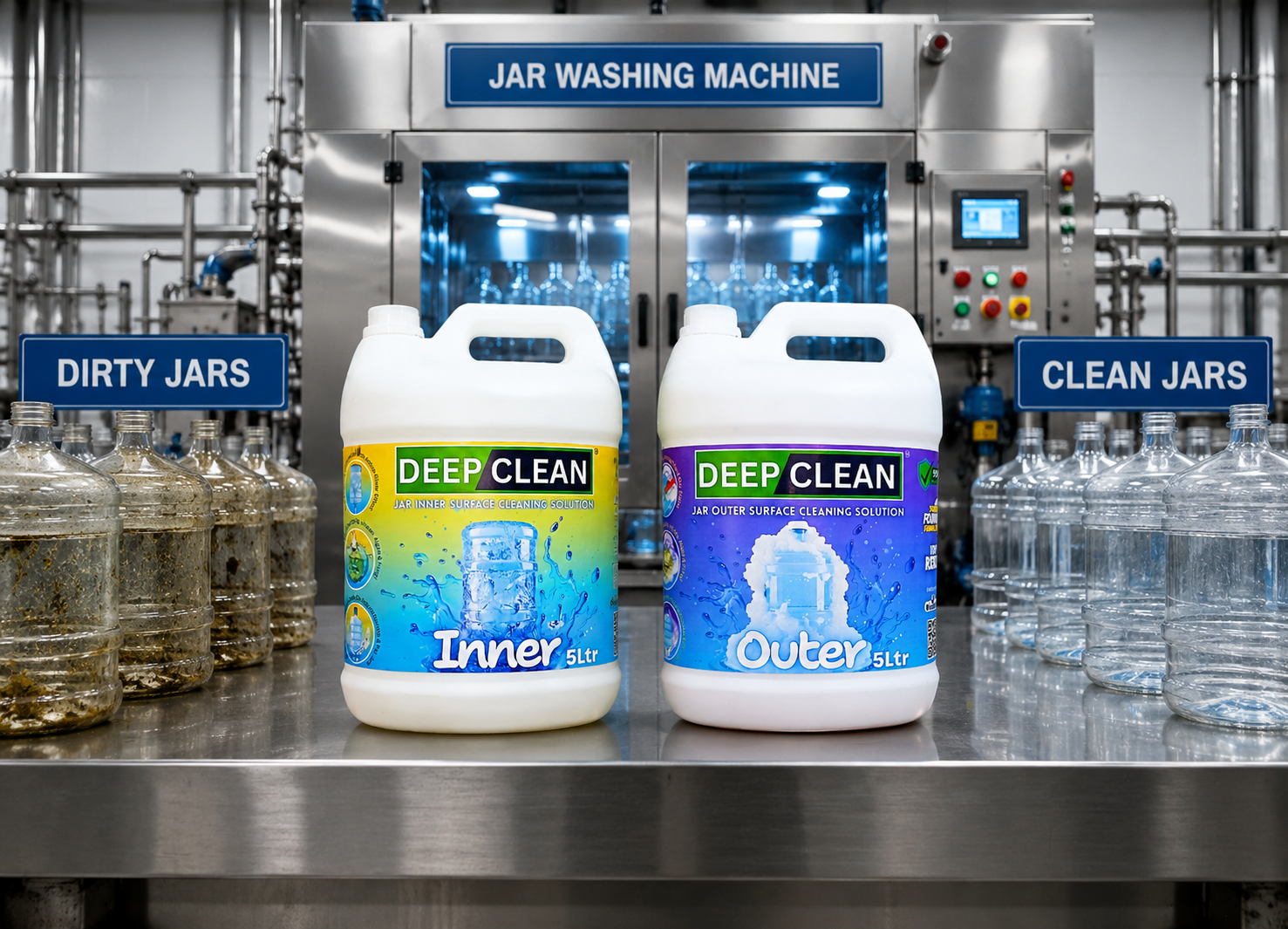
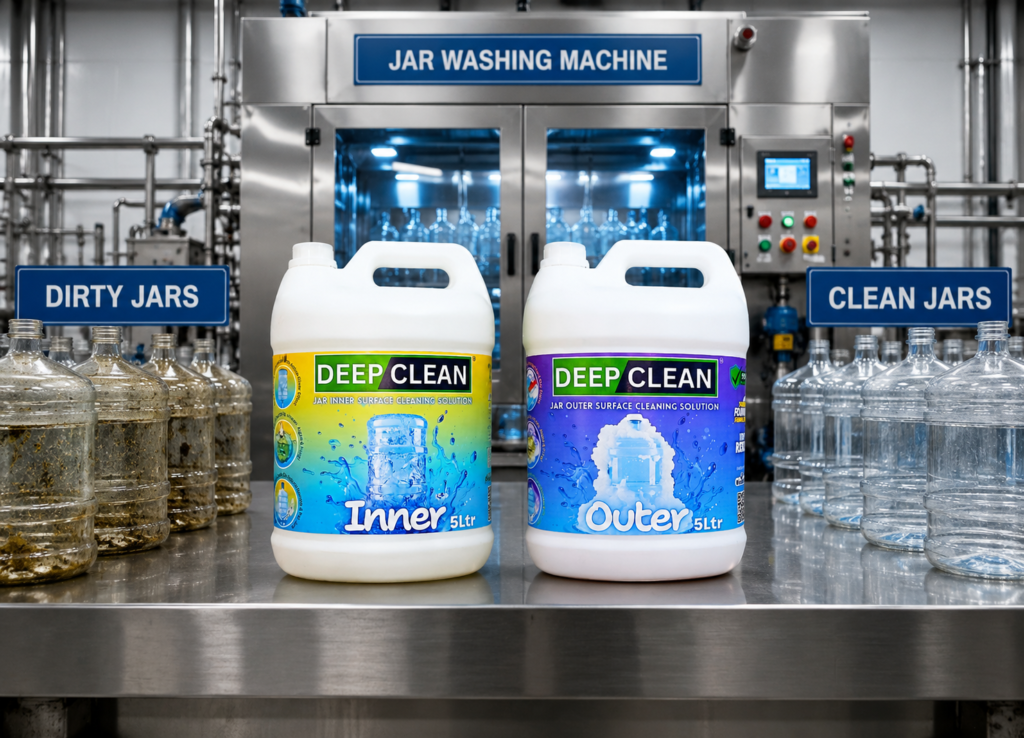
DEEP CLEAN Jar Outer Surface Cleaning Solution

Ye specially jar ke bahari surface se:
✅ dirt
✅ stains
✅ oil marks
✅ algae deposits

remove karne me help karta hai aur jar ko cleaner aur more presentable banata hai.

3. Inner Surface Cleaning

Water quality maintain karne ke liye jar ka internal cleaning process sabse critical stage hota hai.

Jar ke andar:

  • biofilm
  • odor
  • bacteria
  • scaling

develop ho sakta hai jo directly drinking water quality ko affect karta hai.

Isi liye proper inner washing chemical use karna bahot important hota hai.

DEEP CLEAN Jar Inner Surface Cleaning Solution

Ye specially jar ke inner surface cleaning ke liye designed hota hai aur:
✅ stubborn deposits remove karne
✅ odor control karne
✅ hygiene improve karne
✅ internal surface cleaning enhance karne

me help karta hai.

Professional jar washing setup me inner aur outer cleaning dono properly maintain karna bahot important hota hai.


4. Brushing & Internal Jet Cleaning

Kai jars ke andar stubborn deposits jam jate hain jo sirf chemical circulation se remove nahi hote.

Isliye:

  • internal brushing
  • rotating jet cleaning
  • pressure washing

ka use kiya jata hai.

Especially jar neck aur bottom corners properly clean karna bahot important hota hai.

5. Sanitization Process

Sirf washing enough nahi hoti. Proper sanitization bhi zaruri hoti hai.

Sanitization harmful microorganisms ko control karne me help karti hai.

Commonly:

  • food-safe sanitizers
  • disinfectants
  • ozone treatment
  • UV sanitization

use ki jati hai.

Ye step packaged drinking water quality maintain karne ke liye critical hota hai.


6. Final Rinsing

Chemical washing ke baad jars ko properly rinse karna bahot important hota hai taki koi chemical residue na bache.

Generally purified water ya RO water se final rinsing ki jati hai.


7. Drying & Inspection

Filling se pehle jars ko inspect kiya jata hai.

Check kiya jata hai:
✅ smell
✅ stains
✅ scratches
✅ cap area hygiene
✅ transparency

Agar jar damaged ho ya hygiene standards meet na kare, toh usko reject kar diya jata hai.

Common Mistakes Jo Jar Plants Ko Avoid Karni Chahiye

1. Low-Quality Cleaning Chemicals Use Karna

Cheap chemicals short-term cost bachate hain, lekin long-term me hygiene aur customer trust dono damage kar sakte hain.


2. Proper Sanitization Skip Karna

Bahot plants sirf washing karte hain, sanitization nahi. Ye ek major hygiene risk ho sakta hai.


3. Dirty Storage Area

Agar cleaned jars ko dirty environment me rakha jaye toh re-contamination ho sakti hai.


4. Machine Maintenance Ignore Karna

Jar washing machine khud clean na ho toh contamination risk increase ho jata hai.


5. Water Quality Testing Na Karna

Regular water testing aur hygiene inspection bahot important hai.


Packaged Drinking Water Industry Me Hygiene Ka Importance

Aaj customers sirf clean water nahi, balki hygienic packaging bhi expect karte hain.

Agar jar:

  • yellow ho
  • smell kare
  • dirty lage

toh customer instantly brand change kar sakta hai.

Isi liye professional jar cleaning directly brand reputation se connected hoti hai.


Final Thoughts

Water jar cleaning ek simple washing process nahi hai — ye packaged drinking water business ka critical hygiene step hai.

Proper:
✅ outer surface cleaning
✅ inner surface cleaning
✅ sanitization
✅ rinsing
✅ inspection

ki help se aap:

  • better water quality maintain kar sakte hain
  • customer trust increase kar sakte hain
  • complaints reduce kar sakte hain
  • brand image improve kar sakte hain

Agar aap packaged drinking water plant ke liye reliable jar cleaning solutions search kar rahe hain, toh Bluewello ke:

  • DEEP CLEAN Jar Outer Surface Cleaning Solution
  • DEEP CLEAN Jar Inner Surface Cleaning Solution

professional jar hygiene maintain karne me help kar sakte hain.

FAQ

Q1. Water jars me smell kyu aati hai?

Generally improper cleaning, bacteria growth ya poor storage conditions ki wajah se smell develop hoti hai.

Q2. Kya normal detergent se water jars clean kar sakte hain?

Professional packaged drinking water plants ko specially formulated cleaning chemicals use karne chahiye.

Q3. Jar sanitization kyu important hai?

Sanitization microorganisms aur contamination risk reduce karne me help karta hai.

Q4. Water jar cleaning kitni baar karni chahiye?

Har reuse cycle ke baad proper cleaning aur sanitization karni chahiye.

Q5. Kya inner aur outer cleaning ke liye alag chemicals use hote hain?

Haan, professional jar washing me inner aur outer surface cleaning ke liye specially designed solutions use kiye jate hain for better hygiene and cleaning performance.

Water treatment industry me “DM Water” aur “RO Water” ye dono terms bahot commonly use hoti hain. Lekin bahot log abhi bhi confuse hote hain ki in dono me actual difference kya hota hai.

Kya DM Water aur RO Water same hote hain?
Kya dono ka TDS zero hota hai?
Aur industrial use ke liye kaunsa better hota hai?

Agar aap bhi in questions ka answer search kar rahe hain, toh ye blog aapke liye hai.

Is article me hum simple Hinglish me samjhenge:

  • DM Water kya hota hai
  • RO Water kya hota hai
  • In dono me kya difference hai
  • Industrial applications kya hain
  • Aur kaunsa water kis purpose ke liye best hota hai
DM Water vs RO Water

DM Water Kya Hota Hai?

DM Water ka full form hota hai Demineralized Water.

Is water se almost saare dissolved minerals aur ions remove kar diye jate hain. DM water banane ke liye generally ion exchange process use hota hai.

Is process me special resins water ke andar present:

  • calcium
  • magnesium
  • sodium
  • chloride
  • sulphate

jaise ions ko remove kar dete hain.

Result me bahot low conductivity aur almost mineral-free water milta hai.

DM Water ki Characteristics:

✅ Very low conductivity
✅ Extremely low mineral content
✅ Industrial-grade purified water
✅ Boiler aur laboratory applications me commonly use hota hai


RO Water Kya Hota Hai?

RO Water ka matlab hota hai Reverse Osmosis Water.

RO system me water ko ek semi-permeable membrane ke through high pressure se pass kiya jata hai. Ye membrane:

  • dissolved salts
  • heavy metals
  • bacteria
  • impurities

ko remove karti hai.

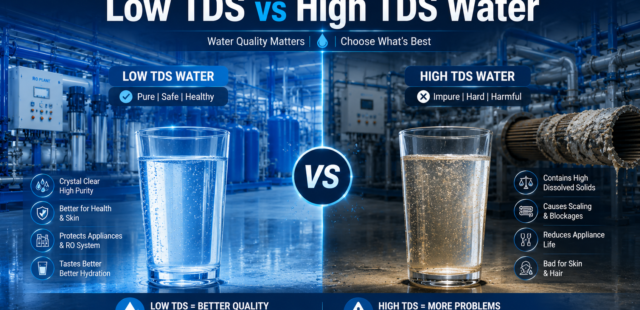
RO process mainly TDS reduce karne ke liye use hota hai.

RO Water ki Characteristics:

✅ Low TDS water
✅ Better taste and odor
✅ Drinking purpose ke liye suitable
✅ Commercial aur industrial dono applications me use hota hai

DM Water vs RO Water: Main Difference

Ab sabse important question — in dono me actual difference kya hai?

1. Purification Process

DM Water:

Ion exchange resin technology use hoti hai.

RO Water:

Semi-permeable membrane filtration use hota hai.


2. Mineral Removal Capacity

DM Water:

Almost saare ions completely remove ho jate hain.

RO Water:

Most dissolved salts remove hote hain, lekin completely zero minerals hona zaruri nahi hota.


3. Conductivity

DM Water:

Very low conductivity hoti hai.

RO Water:

DM water se comparatively higher conductivity hoti hai.


4. TDS Level

DM Water:

TDS almost zero ke close ho sakta hai.

RO Water:

Low TDS hota hai, but completely zero nahi hota.


5. Applications

DM Water Uses:

  • Boiler feed water
  • Laboratory use
  • Pharmaceutical industry
  • Battery manufacturing
  • Chemical processing

RO Water Uses:

  • Drinking water
  • Commercial RO plants
  • Food industry
  • Hotels & restaurants
  • Industrial pre-treatment

Kya DM Water Drinking Ke Liye Safe Hai?

Technically DM water highly purified hota hai, lekin regular drinking purpose ke liye generally recommend nahi kiya jata.

Reason?
Kyuki isme essential minerals bhi remove ho jate hain.

RO water drinking purpose ke liye zyada commonly use hota hai because usme controlled mineral balance maintain kiya ja sakta hai.


Industrial Applications Me Kaunsa Better Hai?

Ye completely application par depend karta hai.

DM Water Best Hai:

  • High purity requirement
  • Boiler systems
  • Labs
  • Pharmaceuticals

RO Water Best Hai:

  • General water purification
  • Drinking water plants
  • Commercial usage
  • Industrial pre-treatment

Kai industries me pehle RO system aur uske baad DM plant use kiya jata hai taki ultra-pure water achieve kiya ja sake.

Kya RO Water Ko DM Water Banaya Ja Sakta Hai?

Haan, bahot baar industries me RO water ko further DM treatment diya jata hai.

Isse:

  • resin life improve hoti hai
  • operating cost reduce hoti hai
  • better purification achieve hoti hai

Isi wajah se RO + DM combination industrial water treatment me bahot popular hai.


DM Plant Aur RO Plant Maintenance Kyu Important Hai?

Agar proper maintenance na ho toh:

  • water quality affect ho sakti hai
  • membranes choke ho sakti hain
  • resins damage ho sakte hain
  • operating cost increase ho sakta hai

Isliye:
✅ Proper chemical dosing
✅ Timely cleaning
✅ Water testing
✅ Quality treatment chemicals

bahot important hote hain.

Final Thoughts

DM Water aur RO Water dono hi water purification ke important forms hain, lekin inka purpose alag hota hai.

Agar aapko:

  • ultra-pure industrial water chahiye → DM Water better hai
  • drinking ya commercial purified water chahiye → RO Water suitable hai

Right system choose karna completely aapki application aur water quality requirement par depend karta hai.

Agar aap industrial water treatment, RO chemicals ya plant maintenance solutions search kar rahe hain, toh Bluewello aapko reliable water treatment solutions provide kar sakta hai.

FAQ

Q1. Kya DM Water aur Distilled Water same hote hain?

Nahi, dono purification methods different hote hain. Distilled water evaporation process se banta hai, jabki DM water ion exchange process se.

Q2. Kya RO water completely pure hota hai?

RO water highly purified hota hai, lekin DM water jitna ultra-pure zaruri nahi hota.

Q3. Kya DM water battery me use hota hai?

Haan, DM water battery applications me commonly use hota hai.

Q4. Kya RO aur DM system saath me use kiye ja sakte hain?

Haan, industrial plants me RO + DM combination bahot common hai.

Agar aap RO Plant use karte hain, toh aapne kabhi na kabhi ye problem zarur face ki hogi —
“Membrane baar-baar choke ho rahi hai.”

Kabhi water flow kam ho jata hai, kabhi TDS suddenly increase ho jata hai, aur kabhi pressure itna badh jata hai ki poora plant performance down ho jata hai. Ye sab signs hain ki aapki RO membrane properly kaam nahi kar rahi.

RO membrane kisi bhi RO plant ka “heart” hoti hai. Agar membrane healthy rahegi toh plant smooth chalega, maintenance cost kam rahegi aur water quality bhi better milegi.

Lekin question ye hai ki membrane itni jaldi choke hoti kyu hai?

Aaj is blog me hum jaanenge RO membrane choking ke 7 sabse common reasons aur unke practical solutions.

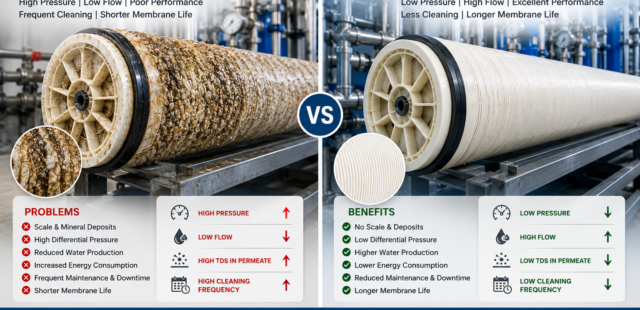
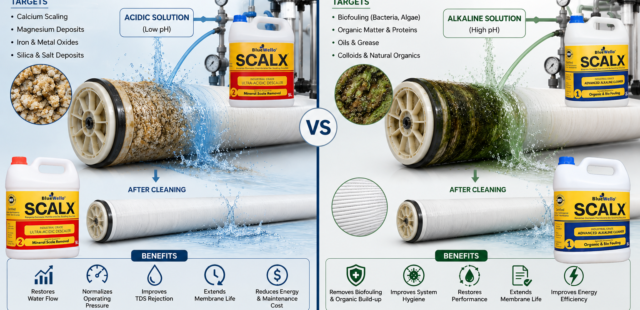
Choked Membrane V/S Clean Membrane

1. Water Me Excess Scaling

RO membrane choke hone ka sabse common reason hota hai scaling.

Jab raw water me calcium, magnesium, silica ya hardness zyada hoti hai, toh membrane surface par dheere-dheere deposits jamne lagte hain. Isse water passage block hone lagta hai.

Scaling ke signs:

  • Pressure increase hona
  • Water flow kam hona
  • Recovery decrease hona
  • Frequent cleaning requirement

Solution:

RO plant me proper RO Antiscalant dosing use karna bahot important hai. Antiscalant scaling ko control karta hai aur membrane life increase karta hai.

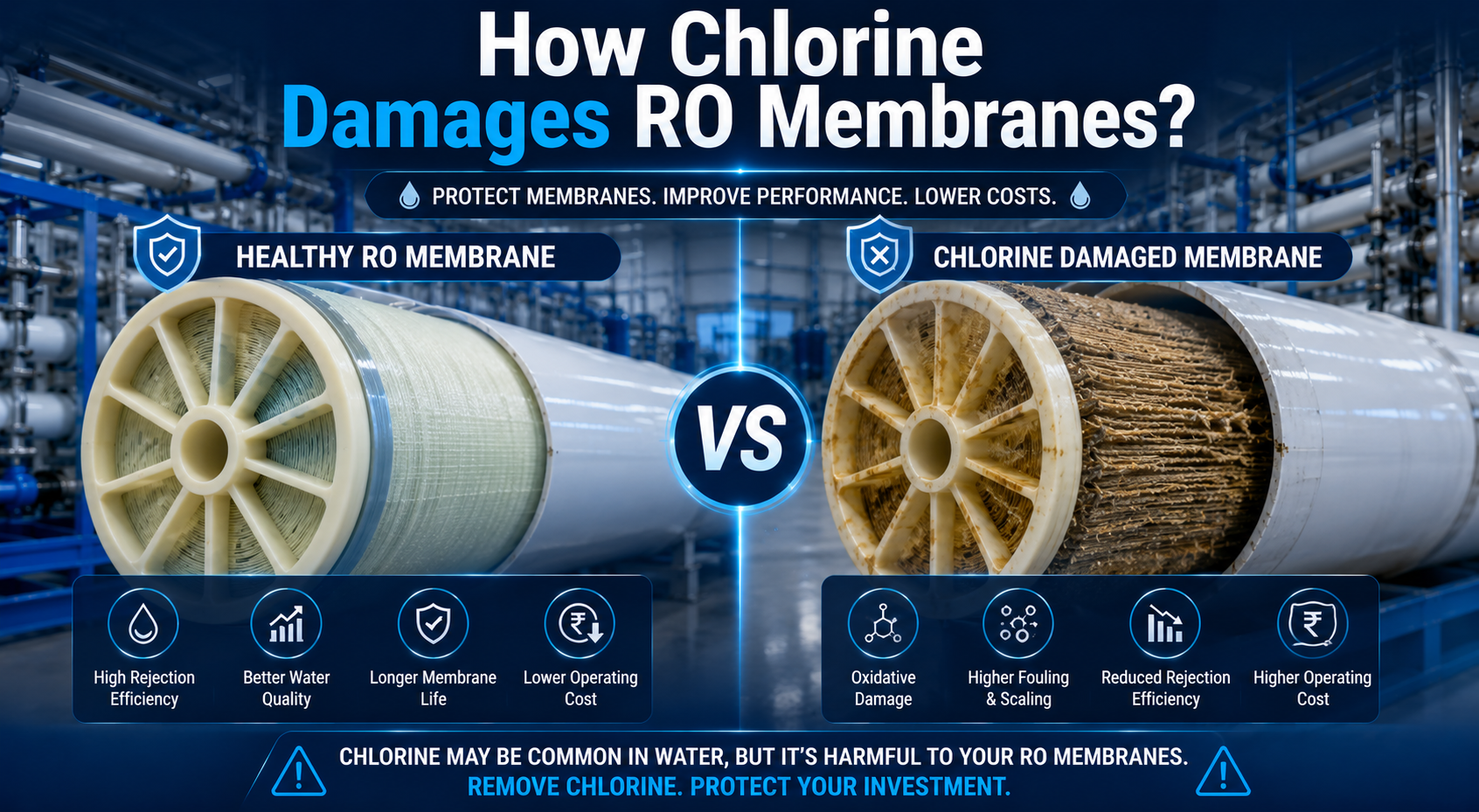
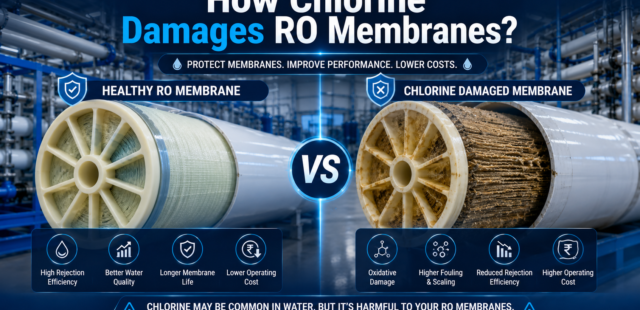
2. Chlorine Damage

Bahot baar raw water me chlorine present hoti hai. Chlorine bacteria ko kill karne ke liye useful hoti hai, lekin RO membrane ke liye dangerous hoti hai.

Agar chlorine properly remove na ho toh membrane permanently damage ho sakti hai.

Common symptoms:

  • Salt rejection suddenly kam hona
  • TDS increase hona
  • Membrane performance down hona

Solution:

RO system me proper de-chlorination chemical ya SMBS dosing use karni chahiye taki chlorine membrane tak na pahunch sake.

3. Improper Pre-Treatment

Kai plants me membrane se pehle proper filtration nahi hoti. Result? Dirt, sand, suspended particles directly membrane par deposit hone lagte hain.

Agar:

  • Sand filter proper kaam nahi kar raha
  • Carbon filter maintenance poor hai
  • Cartridge filter timely replace nahi ho raha

Toh membrane jaldi choke ho sakti hai.

Solution:

Pre-treatment units ki regular servicing aur timely filter replacement bahot zaruri hai.

4. Biofouling (Bacteria & Slime Build-Up)

Water ke andar bacteria aur microorganisms grow karna ek normal cheez hai. Lekin jab ye membrane surface par slime layer bana dete hain, tab problem start hoti hai.

Is process ko biofouling bola jata hai.

Biofouling ke signs:

  • Bad smell
  • Pressure increase
  • Sticky deposits
  • Frequent membrane cleaning

Solution:

Regular sanitization aur suitable biocide treatment use karna chahiye. Plant hygiene maintain karna bhi equally important hai.

5. Wrong Antiscalant Dosing

Sirf antiscalant use karna enough nahi hota. Agar dosing wrong ho toh bhi scaling problem continue reh sakti hai.

Common mistakes:

  • Under dosing
  • Over dosing
  • Low quality chemical use karna
  • Dosing pump calibration incorrect hona

Solution:

Water analysis ke according proper dosage maintain karna chahiye aur trusted RO chemicals hi use karne chahiye.

6. Membrane Cleaning Delay Karna

Bahot se plant operators membrane cleaning ko delay karte rehte hain. Dheere-dheere deposits hard ho jate hain aur membrane permanently damage hone lagti hai.

Result:

  • Cleaning effectiveness kam ho jati hai
  • Membrane life reduce hoti hai
  • Replacement cost badh jata hai

Solution:

Pressure aur flow regularly monitor karein aur timely membrane cleaning schedule maintain karein.

7. Poor Plant Operation & Maintenance

Kabhi-kabhi problem chemicals ya water quality me nahi hoti, balki plant operation me hoti hai.

Examples:

  • Sudden shutdowns
  • Dry running
  • Pressure fluctuation
  • Long idle conditions

Ye sab membrane stress increase karte hain aur choking ka reason ban sakte hain.

Solution:

RO plant ko proper SOP (Standard Operating Procedure) ke according operate karna chahiye.

RO Membrane Choking Se Kaise Bachein?

Agar aap membrane life increase karna chahte hain toh ye basic points hamesha follow karein:

✅ Proper antiscalant dosing use karein
✅ Chlorine completely remove karein
✅ Filters timely replace karein
✅ Membrane cleaning delay na karein
✅ Plant hygiene maintain rakhein
✅ Water testing regularly karte rahein
✅ Quality RO chemicals hi use karein

Final Thoughts

RO membrane choking ek common problem hai, lekin agar root cause identify kar liya jaye toh isko easily control kiya ja sakta hai.

Proper maintenance, right chemical treatment aur regular monitoring ki help se aap:

  • Membrane life increase kar sakte hain
  • Plant efficiency improve kar sakte hain
  • Maintenance cost reduce kar sakte hain

Agar aap apne RO plant ke liye effective water treatment chemical solutions search kar rahe hain, toh Bluewello ke RO chemicals aapki plant performance improve karne me help kar sakte hain.

“Need expert RO chemical solutions for your plant? Contact Bluewello for high-performance water treatment chemicals.”

FAQ

Q1. RO membrane kitne time me choke hoti hai?

Ye completely water quality aur maintenance par depend karta hai. Proper treatment ke saath membrane ka life kaafi increase kiya ja sakta hai.

Q2. Membrane choke hone ka pehla sign kya hota hai?

Generally pressure increase aur water flow decrease hona starting signs hote hain.

Q3. Kya antiscalant membrane life increase karta hai?

Haan, proper antiscalant scaling control karta hai aur membrane ko safe rakhta hai.