Mini Cart

Introduction

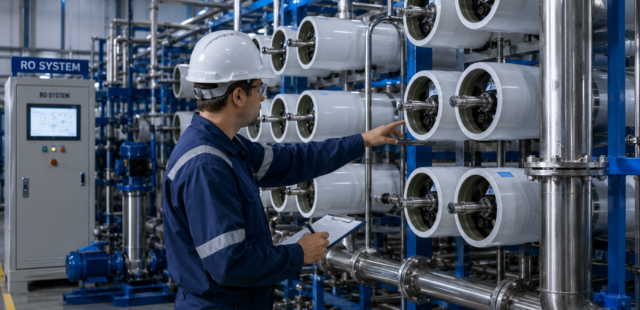
Industrial aur commercial RO plants me membrane sabse important component hoti hai. RO membrane hi water se dissolved salts, impurities aur contaminants ko remove karti hai. Lekin agar membrane ki proper care aur maintenance na ki jaye, toh membrane jaldi damage ho sakti hai.

Membrane replacement ka cost kaafi high hota hai, isliye industries aur plant operators hamesha membrane life increase karne par focus karte hain. Proper maintenance, correct chemical use aur accurate dosing se RO membrane ki performance aur lifespan dono improve ki ja sakti hain.

Is blog me hum detail me samjhenge ki RO plant membrane life kaise increase karein aur kaun-kaun si important practices follow karni chahiye.


RO Membrane Kya Hoti Hai?

RO membrane ek semi-permeable membrane hoti hai jo high-pressure filtration process ke through dissolved impurities aur salts ko remove karti hai.

RO process ko simple equation se samjha ja sakta hai:

Yahan:

  • J = Water flux
  • A = Membrane permeability
  • ΔP = Applied pressure
  • Δπ = Osmotic pressure

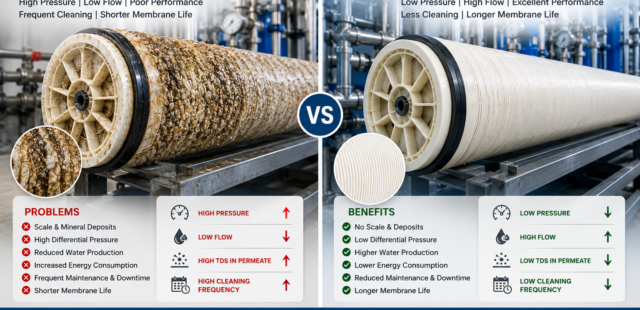
Agar membrane dirty ya scaled ho jaye toh water flux reduce ho jata hai aur RO efficiency affect hoti hai.
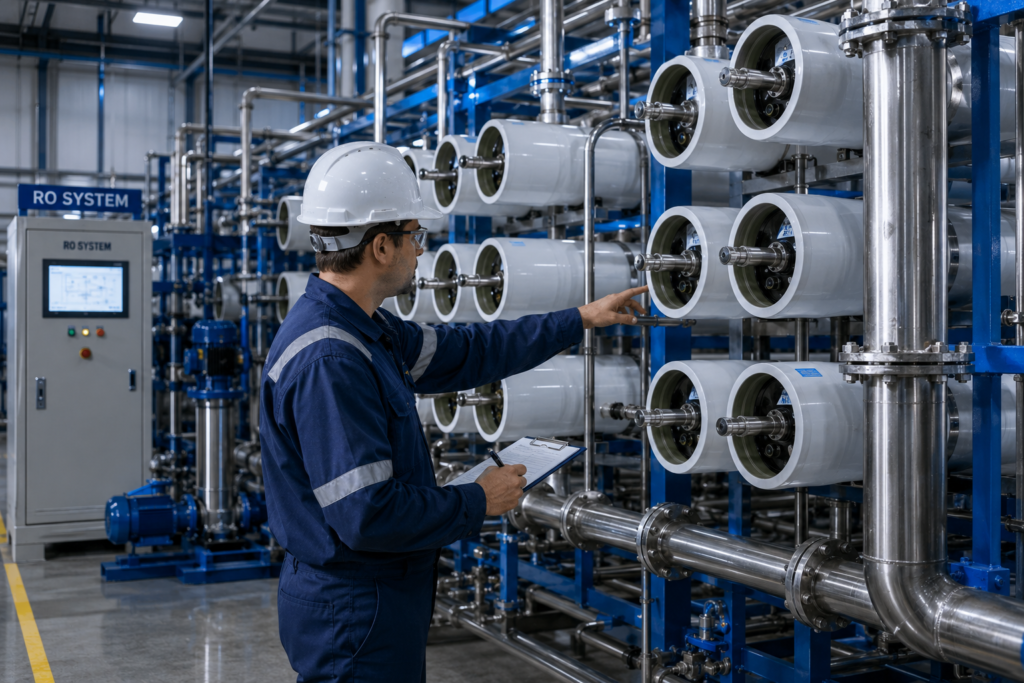
Clean Membranes

1. Proper Pre-Treatment Bahut Important Hai

RO plant ka pre-treatment membrane protection ka first step hota hai.

Pre-treatment systems:

  • Sand Filter
  • Carbon Filter
  • Water Softener
  • Micron Cartridge Filter

ye sab impurities aur hardness reduce karte hain.

Agar untreated hard water directly membrane par jaye toh scaling quickly develop ho jati hai.


2. Water Softener Use Karein

Hard water RO membrane ke liye sabse dangerous hota hai.

Calcium aur magnesium deposits membrane surface par scale create karte hain jisse:

  • Flow reduce hota hai
  • Pressure increase hota hai
  • Membrane damage hoti hai

Water softener hardness remove karke membrane protection provide karta hai.


3. Anti-Scalant Chemical Dosing

Anti-scalant chemicals membrane scaling ko prevent karte hain.

Ye chemicals calcium aur mineral deposits ko membrane surface par jamne se rokte hain.

Anti-scalant dosing:

  • Controlled quantity me honi chahiye
  • Feed water quality ke according set honi chahiye

Improper dosing se scaling ya chemical fouling dono ho sakte hain.


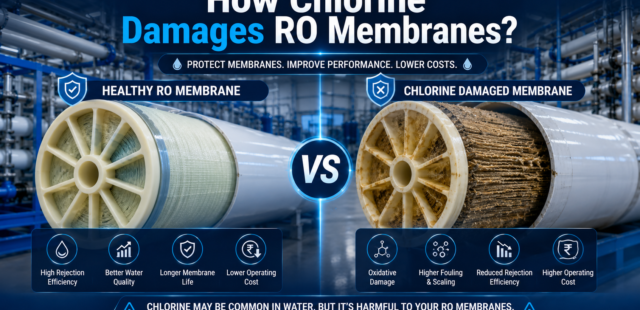
4. Chlorine Control Bahut Zaroori Hai

RO membranes chlorine-sensitive hoti hain.

Excess chlorine membrane layer ko permanently damage kar sakta hai.

Chlorine removal ke liye:

  • Activated carbon filter
  • Sodium bisulfite dosing

commonly use ki jati hai.

Chlorine neutralization reaction ko simple form me is equation se samjha ja sakta hai:

Proper chlorine control membrane life significantly improve karta hai.


5. Regular Membrane Cleaning

Time ke saath membrane surface par:

  • Scale
  • Organic fouling
  • Biofouling
  • Dirt particles

collect hone lagte hain.

Isliye regular CIP (Clean-In-Place) cleaning bahut important hoti hai.


Membrane Cleaning Me Kaunse Chemicals Use Hote Hain?

Acid Cleaner

Calcium scaling remove karne ke liye use hota hai.


Alkaline Cleaner

Organic fouling aur oil contamination remove karta hai.


Biocide Chemicals

Bacterial growth aur biofouling control karte hain.


6. Correct Operating Pressure Maintain Karein

RO plant me excessive pressure membrane damage ka reason ban sakta hai.

Low pressure:

  • Poor water recovery

High pressure:

  • Membrane stress
  • Membrane tearing risk

Proper pressure monitoring membrane safety ke liye important hota hai.


7. Feed Water Quality Regular Check Karein

Feed water parameters regularly monitor karne chahiye:

  • TDS
  • Hardness
  • pH
  • Chlorine level
  • SDI (Silt Density Index)

Poor feed water directly membrane performance affect karta hai.


8. Cartridge Filters Regular Replace Karein

Micron cartridge filters dirt particles ko membrane tak pahunchne se rokte hain.

Dirty cartridge filters:

  • Pressure drop create karte hain
  • Membrane fouling increase karte hain

Timely replacement membrane protection ke liye important hota hai.


9. Biofouling Control Karein

Bacteria aur algae membrane surface par slimy layer bana dete hain.

Isse:

  • Water flow reduce hota hai
  • Pressure increase hota hai
  • Membrane cleaning frequency badhti hai

Proper sanitization aur biocide treatment biofouling control karta hai.


10. Plant Shutdown Procedure Follow Karein

Agar RO plant long time ke liye shutdown ho:

  • Membranes dry nahi honi chahiye
  • Preservative chemicals use karne chahiye
  • Stagnant water avoid karna chahiye

Proper shutdown maintenance membrane life increase karta hai.

Membrane Performance Kaise Monitor Karein?

Important indicators:

  • Permeate flow reduction
  • Pressure increase
  • Salt rejection decrease
  • High conductivity

Agar ye symptoms dikhein toh membrane cleaning ya inspection required hoti hai.


RO Membrane Life Normally Kitni Hoti Hai?

Proper maintenance ke saath industrial RO membranes generally:

  • 2–5 years

tak efficiently work kar sakti hain.

Poor maintenance membrane life ko bahut reduce kar deta hai.


Conclusion

RO membrane industrial water treatment systems ka heart hoti hai. Proper maintenance, chemical dosing aur pre-treatment systems membrane protection ke liye bahut important hote hain.

Anti-scalant dosing, chlorine control, regular cleaning aur feed water monitoring se membrane life significantly increase ki ja sakti hai. Properly maintained membranes better water quality, lower maintenance cost aur higher plant efficiency provide karti hain.

Frequently Asked Questions (FAQs)

1. RO membrane ki life kitni hoti hai?

Proper maintenance ke saath RO membrane 2–5 years tak chal sakti hai.


2. Membrane scaling kya hota hai?

Calcium aur mineral deposits membrane surface par jam jate hain jise scaling kaha jata hai.


3. Anti-scalant chemical ka role kya hai?

Ye membrane par scaling formation ko prevent karta hai.


4. Kya chlorine RO membrane ko damage karta hai?

Haan, excess chlorine membrane layer ko permanently damage kar sakta hai.


5. RO membrane cleaning kitni baar karni chahiye?

Plant condition aur feed water quality ke according periodic CIP cleaning karni chahiye.


6. Water softener membrane protection me kaise help karta hai?

Water softener hardness remove karke membrane scaling reduce karta hai.


7. Cartridge filter replacement important kyun hai?

Dirty cartridge filters membrane fouling aur pressure drop create karte hain.


8. Biofouling kya hota hai?

Bacteria aur algae membrane surface par slimy contamination create karte hain.


9. RO membrane damage ke symptoms kya hain?

Low water flow, high pressure aur poor salt rejection membrane damage ke signs hote hain.


10. Proper chemical dosing kyun important hai?

Correct dosing membrane scaling, fouling aur chemical damage ko prevent karti hai.
Introduction

Water treatment industry me disinfection sabse important process hota hai. Chahe drinking water plant ho, swimming pool ho, industrial RO system ho ya wastewater treatment plant — harmful bacteria aur microorganisms ko remove karna bahut zaroori hota hai. Isi purpose ke liye ek commonly used chemical hai Sodium Hypochlorite.

Sodium Hypochlorite water treatment me ek powerful disinfectant ke roop me use hota hai jo water ko germs aur harmful microorganisms se safe banata hai. Is blog me hum detail me samjhenge ki Sodium Hypochlorite kya hota hai, water treatment me iska role kya hai aur industries isse kyun use karti hain.


Sodium Hypochlorite Kya Hota Hai?

Sodium Hypochlorite ek chemical compound hai jo commonly liquid chlorine ke naam se bhi jana jata hai.

Iska chemical formula hota hai:

NaOClNaOCl

Ye generally pale yellow liquid form me available hota hai aur strong disinfectant properties rakhta hai.

Water treatment plants me Sodium Hypochlorite ka use bacteria, viruses aur algae ko destroy karne ke liye kiya jata hai.

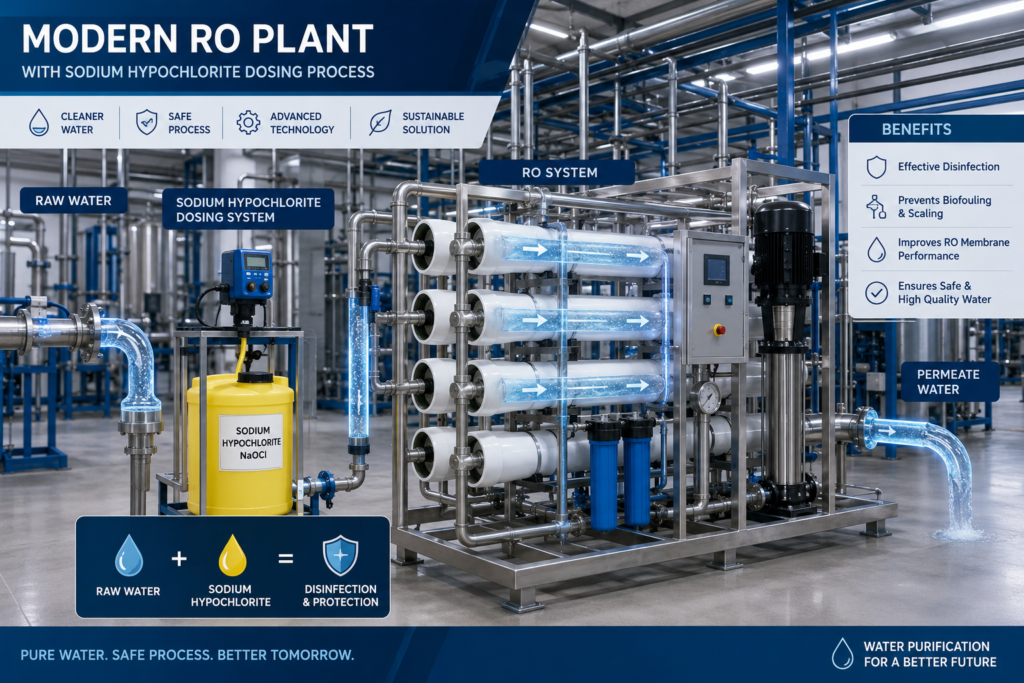
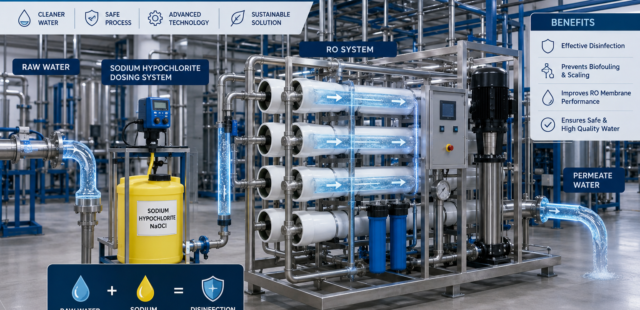
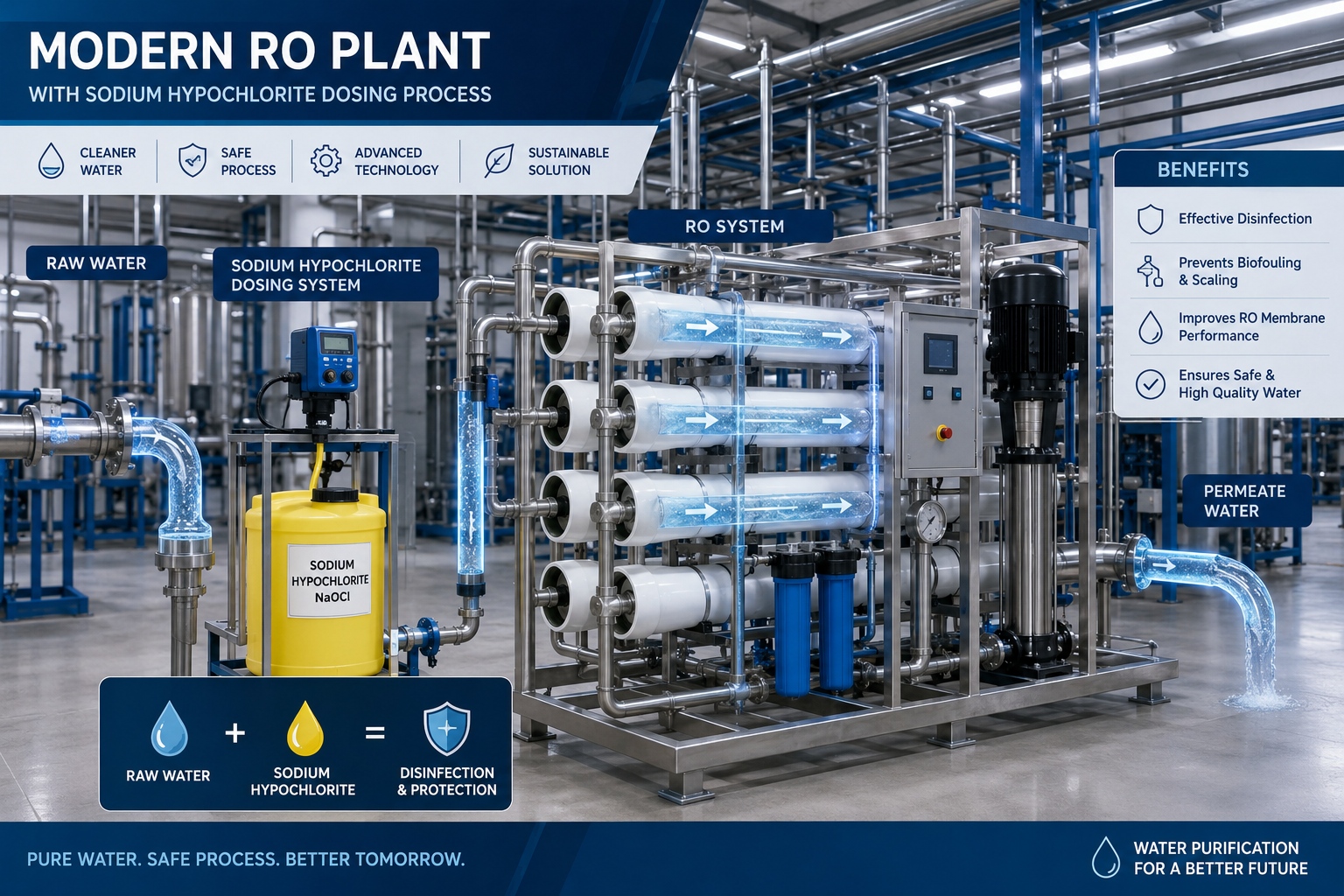
Modern industrial RO plant with sodium hypochlorite chemical dosing System

Water Treatment Me Sodium Hypochlorite Kaise Kaam Karta Hai?

Jab Sodium Hypochlorite water me mix hota hai, toh ye hypochlorous acid produce karta hai jo microorganisms ko kill karta hai.

Reaction ko simple form me is equation se samjha ja sakta hai:

NaOCl+H2O→HOCl+NaOHNaOCl + H_2O \rightarrow HOCl + NaOH

Yahan:

  • HOCl (Hypochlorous Acid) = Main disinfecting agent
  • NaOH = Sodium Hydroxide

Hypochlorous acid bacteria aur viruses ke cell walls ko damage karke unhe inactive kar deta hai.


Sodium Hypochlorite Water Treatment Me Kyun Important Hai?

Water me harmful microorganisms health risks create kar sakte hain. Sodium Hypochlorite effectively:

  • Bacteria remove karta hai
  • Viruses destroy karta hai
  • Algae growth control karta hai
  • Water odor reduce karta hai
  • Water ko hygienic banata hai

Isi wajah se ye municipal aur industrial water treatment systems me widely use hota hai.


Sodium Hypochlorite Ke Major Applications

1. Drinking Water Disinfection

Municipal drinking water plants me Sodium Hypochlorite water ko disinfect karne ke liye use hota hai.

Ye:

  • Waterborne diseases prevent karta hai
  • Germs ko kill karta hai
  • Safe drinking water ensure karta hai

2. Industrial RO Plants

Industrial RO systems me biological fouling ek common problem hoti hai.

Sodium Hypochlorite:

  • Bacterial growth control karta hai
  • Pipeline sanitization me help karta hai
  • Pre-treatment disinfection provide karta hai

Lekin RO membrane ke saath controlled dosing bahut important hoti hai kyunki excess chlorine membrane damage kar sakta hai.


3. Swimming Pool Water Treatment

Swimming pools me water continuously disinfect karna zaroori hota hai.

Sodium Hypochlorite:

  • Water clarity maintain karta hai
  • Germs aur algae ko control karta hai
  • Pool hygiene improve karta hai

4. Wastewater Treatment

Wastewater plants me treated water ko discharge karne se pehle disinfect kiya jata hai.

Sodium Hypochlorite harmful pathogens ko remove karke environmental safety improve karta hai.


5. Food & Beverage Industry

Food processing plants me hygiene maintain karna bahut important hota hai.

Sodium Hypochlorite:

  • Equipment sanitization
  • Surface cleaning
  • Water disinfection

me use hota hai.

Sodium Hypochlorite Ke Benefits

Strong Disinfectant

Ye bacteria aur viruses ke against highly effective hota hai.


Easy To Use

Liquid form me hone ki wajah se dosing aur handling comparatively easy hoti hai.


Cost-Effective Solution

Large-scale water treatment ke liye economical disinfectant mana jata hai.


Fast Action

Microorganisms ko quickly destroy karta hai.


Odor Control

Bad smell aur organic contamination ko reduce karta hai.


Sodium Hypochlorite Use Karte Time Precautions

Ye ek strong chemical hai, isliye proper handling bahut important hoti hai.

Safety Precautions

  • Gloves aur goggles use karein
  • Proper ventilation maintain karein
  • Direct skin contact avoid karein
  • Sunlight se door store karein
  • Correct dosing maintain karein

Improper handling se irritation aur chemical hazards ho sakte hain.


Excess Sodium Hypochlorite Ke Nuksan

Agar excessive quantity use ki jaye toh:

  • Water me chlorine smell aa sakti hai
  • RO membranes damage ho sakte hain
  • Water taste affect ho sakta hai
  • Corrosion risk increase ho sakta hai

Isi liye accurate dosing systems use karna important hota hai.

Sodium Hypochlorite Aur Chlorine Me Difference

Bahut log Sodium Hypochlorite aur chlorine gas ko same samajhte hain, lekin dono alag forms hain.

Sodium HypochloriteChlorine Gas
Liquid formGas form
Easy handlingHigh safety risk
Common industrial useLarge municipal systems
Safer storageSpecialized handling required

Industrial Water Treatment Me Iska Importance

Industries me microbial contamination production aur equipment dono ko affect kar sakta hai.

Sodium Hypochlorite:

  • Hygiene maintain karta hai
  • Biofouling reduce karta hai
  • Equipment protection me help karta hai
  • Water quality improve karta hai

Isi wajah se ye industrial water treatment ka important part mana jata hai.


Conclusion

Sodium Hypochlorite water treatment industry me ek highly effective disinfectant hai jo bacteria, viruses aur harmful microorganisms ko control karne me help karta hai. Drinking water plants se lekar industrial RO systems aur wastewater treatment tak iska use bahut common hai.

Proper dosing aur safe handling ke saath Sodium Hypochlorite water quality improve karta hai aur hygienic treatment process maintain karne me important role play karta hai.

Frequently Asked Questions (FAQs)

1. Sodium Hypochlorite kya hota hai?

Ye ek liquid disinfectant chemical hai jo water treatment me germs aur bacteria remove karne ke liye use hota hai.


2. Sodium Hypochlorite ka chemical formula kya hai?

Iska chemical formula NaOCl hota hai.


3. Water treatment me Sodium Hypochlorite ka main role kya hai?

Ye water disinfection aur microbial control ke liye use hota hai.


4. Kya Sodium Hypochlorite drinking water me use hota hai?

Haan, controlled quantity me municipal drinking water treatment plants me use hota hai.


5. Kya Sodium Hypochlorite RO membranes ko affect karta hai?

Excess chlorine RO membranes ko damage kar sakta hai, isliye proper dosing important hoti hai.


6. Sodium Hypochlorite aur bleach same hote hain?

Household bleach me bhi Sodium Hypochlorite present hota hai, lekin industrial grades alag concentration me available hote hain.


7. Kya Sodium Hypochlorite algae control karta hai?

Haan, ye algae aur bacterial growth dono ko effectively control karta hai.


8. Sodium Hypochlorite ko safely kaise handle karein?

Gloves, goggles aur proper ventilation ke saath ise handle karna chahiye.


9. Kya Sodium Hypochlorite odor remove karta hai?

Haan, ye water me bad odor aur organic contamination ko reduce karne me help karta hai.


10. Sodium Hypochlorite kahan-kahan use hota hai?

Drinking water plants, swimming pools, RO plants, wastewater treatment aur food industries me iska use hota hai.

RO (Reverse Osmosis) system ka sabse important part uski membrane hoti hai. Ye membrane paani me maujood dissolved salts, impurities, bacteria aur harmful particles ko filter karti hai. Lekin time ke saath membrane par scaling, fouling aur organic deposits jamne lagte hain, jiski wajah se system ki performance dheere-dheere kam ho jaati hai. Isi liye regular RO membrane cleaning bahut zaroori hoti hai.

RO Membrane Cleaning Ki Zarurat Kab Padti Hai?

Agar aap industrial RO plant, commercial RO system ya water treatment unit use karte hain, to kuch clear signs hote hain jo batate hain ki membrane cleaning ka time aa gaya hai.

1. Water Flow Kam Ho Jana

Agar purified water ka production pehle se kam ho gaya hai, to membrane clog ho sakti hai. Deposits membrane ke pores block kar dete hain jisse flow reduce ho jata hai.

2. TDS Rejection Kam Ho Jana

RO membrane ka kaam dissolved solids ko remove karna hota hai. Agar output water ka TDS level badhne lage, to membrane ki efficiency kam ho rahi hoti hai.

3. Operating Pressure Badhna

System ko same amount ka water produce karne ke liye zyada pressure lag raha ho, to iska matlab membrane par scaling ya fouling jam gaya hai.

4. Frequent Shutdown Ya High Energy Consumption

Dirty membrane ki wajah se pumps par extra load padta hai. Isse electricity consumption badh jati hai aur maintenance cost bhi increase hoti hai.

5. Membrane Differential Pressure Increase

Agar inlet aur outlet pressure ka difference bahut zyada ho raha hai, to membrane cleaning immediately karni chahiye.

RO Membrane Fouling Ke Common Reasons

RO membranes normally chaar major problems ki wajah se dirty hoti hain:

  • Scale formation (calcium, magnesium deposits)
  • Organic fouling
  • Biofouling (bacteria aur algae growth)
  • Iron aur metal deposits

Har type ke fouling ko remove karne ke liye alag cleaning chemical aur method use hota hai. Yahin par acidic aur alkaline cleaning ka role aata hai.

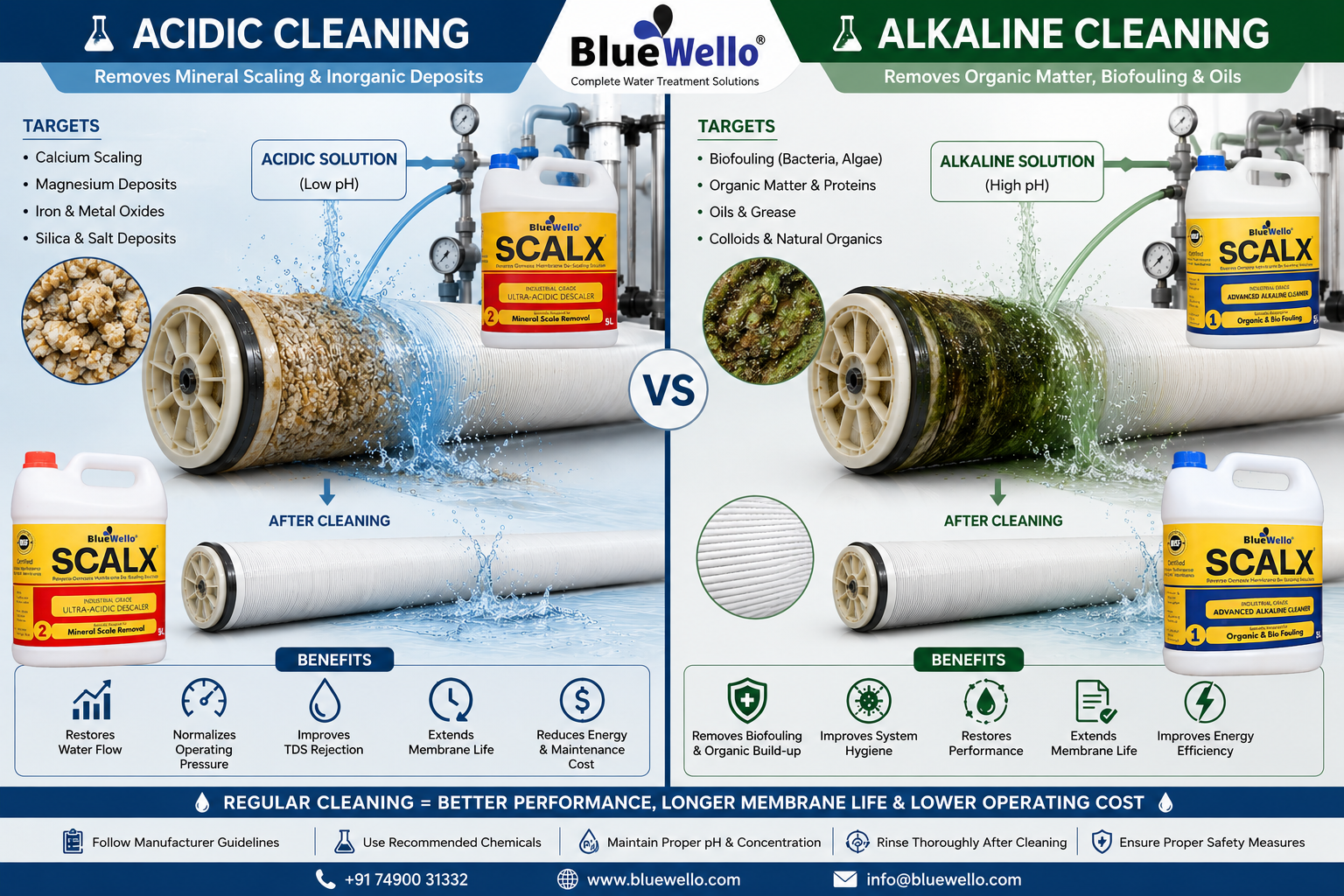
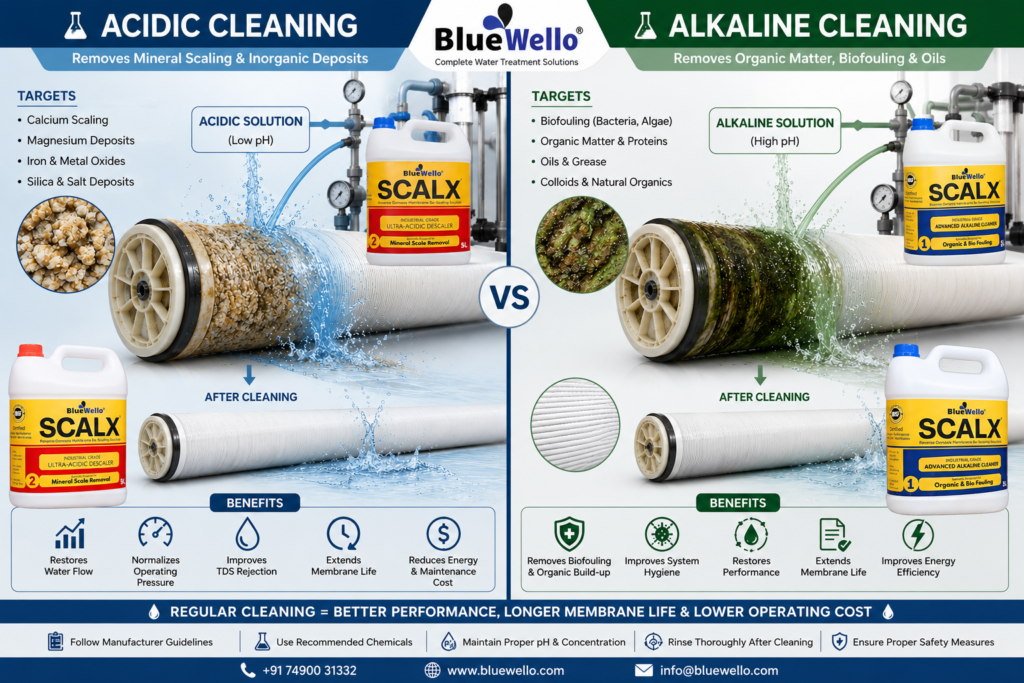
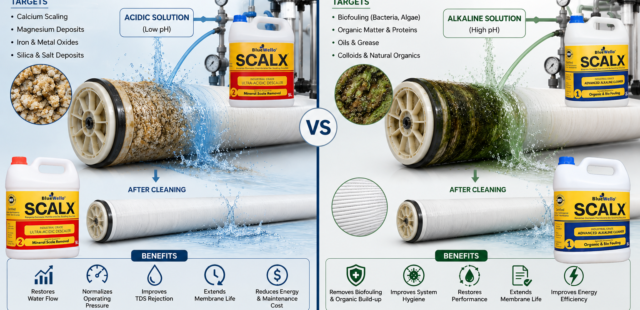
Acid VS Alkaline Cleaning

Acidic Cleaning Kya Hoti Hai?

Acidic cleaning ka use inorganic scaling remove karne ke liye kiya jata hai. Jab membrane par calcium carbonate, metal oxides ya mineral deposits jam jate hain, tab acid-based chemicals effective hote hain.

Acidic Cleaning Kis Situation Me Use Hoti Hai?

  • Calcium scaling
  • Magnesium deposits
  • Iron fouling
  • Silica related deposits (light level)
  • High mineral scaling

Common Acidic Chemicals

  • Citric Acid
  • Hydrochloric Acid (HCl)
  • Sulfuric Acid
  • Phosphoric Acid

Industrial applications me generally mild acids prefer kiye jate hain taaki membrane damage na ho.

Acidic Cleaning Ka Benefit

  • Mineral deposits quickly dissolve ho jate hain
  • Water flow improve hota hai
  • Pressure normalize ho jata hai
  • Membrane efficiency restore hoti hai

Important Precautions

Acidic cleaning ka pH bahut low hota hai. Agar concentration zyada ho ya cleaning time improper ho, to membrane permanently damage ho sakti hai. Isliye manufacturer guidelines follow karna zaroori hai.

Alkaline Cleaning Kya Hoti Hai?

Alkaline cleaning ka use organic fouling aur biological contamination remove karne ke liye hota hai. Jab membrane par oil, grease, bacteria, algae ya protein deposits jamte hain, tab alkaline cleaners effective rehte hain.

Alkaline Cleaning Kis Situation Me Use Hoti Hai?

  • Biofouling
  • Organic matter deposits
  • Oil aur grease contamination
  • Protein fouling
  • Algae buildup

Common Alkaline Chemicals

  • Sodium Hydroxide (Caustic Soda)
  • Sodium Tripolyphosphate
  • EDTA based cleaners
  • Detergent-based membrane cleaners

Alkaline Cleaning Ke Benefits

  • Organic deposits effectively remove hote hain
  • Bacteria growth control hoti hai
  • Membrane life improve hoti hai
  • System sanitation better hota hai

Important Precautions

High alkaline concentration membrane surface ko affect kar sakta hai. Cleaning ke baad proper flushing bahut important hoti hai taaki chemical residue system me na rahe.

Acidic vs Alkaline Cleaning – Kya Difference Hai?

ParameterAcidic CleaningAlkaline Cleaning
Main PurposeMineral scaling remove karnaOrganic aur biofouling remove karna
pH LevelLow pHHigh pH
Effective AgainstCalcium, iron, saltsOil, grease, bacteria
Common ChemicalsCitric acid, HClCaustic soda, detergents
Use FrequencyScaling hone parOrganic fouling hone par

Simple words me samjhein to:

  • Agar membrane par “salt aur mineral deposits” hain → Acidic cleaning.
  • Agar membrane par “organic ya biological dirt” hai → Alkaline cleaning.

Kai cases me dono cleaning sequentially bhi ki jati hain for complete membrane restoration.


RO Membrane Cleaning Kitni Baar Karni Chahiye?

Cleaning frequency water quality aur plant usage par depend karti hai.

General Recommendation:

  • Commercial RO systems: 3–6 months
  • Industrial RO plants: 1–3 months
  • High TDS water areas: More frequent cleaning

Agar pre-treatment system proper ho (sand filter, carbon filter, antiscalant dosing), to membrane life aur cleaning interval dono improve ho jate hain.


Conclusion

RO membrane cleaning ko ignore karna long-term me costly mistake ban sakta hai. Time par cleaning karne se membrane life badhti hai, water quality maintain rehti hai aur energy consumption bhi kam hota hai.

Acidic cleaning mainly mineral scaling ke liye use hoti hai, jabki alkaline cleaning organic aur biological fouling remove karne ke liye best hoti hai. Dono cleaning methods ka correct use RO system ki efficiency maintain karne ke liye bahut important hai.

Agar aap regular monitoring aur timely maintenance karte hain, to aapka RO plant better performance aur longer lifespan ke saath smoothly kaam karega.

FAQs – RO Membrane Cleaning Se Jude Common Questions

1. RO membrane cleaning kitni baar karni chahiye?

Ye completely water quality aur system usage par depend karta hai. Normally industrial RO plants me 1–3 months aur commercial systems me 3–6 months ke andar cleaning recommend ki jati hai.

2. Kaise pata chalega ki RO membrane dirty ho gayi hai?

Agar water flow kam ho raha ho, TDS increase ho raha ho, pressure zyada aa raha ho ya electricity consumption badh gaya ho, to membrane cleaning ki zarurat ho sakti hai.

3. Acidic cleaning aur alkaline cleaning me kya difference hai?

Acidic cleaning mineral scaling remove karti hai, jabki alkaline cleaning organic fouling aur bacteria deposits remove karti hai.

4. Kya RO membrane cleaning ghar par ki ja sakti hai?

Small domestic RO systems me basic cleaning possible hoti hai, lekin industrial aur commercial plants ke liye trained technician ki help lena better hota hai.

5. Agar membrane cleaning time par na ho to kya hoga?

System efficiency kam ho jayegi, water quality affect hogi, pressure aur energy consumption badh jayega aur membrane jaldi damage ho sakti hai.

6. Kya acidic cleaning membrane ko damage kar sakti hai?

Haan, agar acid concentration zyada ho ya incorrect chemical use kiya jaye to membrane permanently damage ho sakti hai. Isliye proper pH aur manufacturer guidelines follow karni chahiye.

7. Alkaline cleaning kis type ke fouling ke liye best hai?

Ye biofouling, oil, grease, algae aur organic deposits remove karne ke liye sabse effective hoti hai.

8. Membrane ki life kaise increase ki ja sakti hai?

Regular maintenance, proper pre-treatment, antiscalant dosing aur timely cleaning se membrane ki life kaafi improve hoti hai.

Water treatment industry me “DM Water” ek bahot common term hai. Lekin bahot log abhi bhi confuse hote hain ki DM Water actually hota kya hai aur iska use kaha hota hai.

Kya DM Water normal water se different hota hai?
Kya DM Water drinking ke liye safe hota hai?
Aur industries isko itna important kyu maanti hain?

Agar aap bhi ye sab samajhna chahte hain, toh ye blog aapke liye hai.

Is article me hum simple Hinglish me jaanenge:

  • DM Water kya hota hai
  • DM Water kaise banta hai
  • Iske uses kya hain
  • Aur industries me iska importance kyu hai

DM Water Kya Hota Hai?

DM Water ka full form hota hai:

Demineralized Water

Naam se hi clear hai ki is water se minerals remove kar diye jate hain.

Normal water ke andar naturally different dissolved minerals aur salts present hote hain jaise:

  • calcium
  • magnesium
  • sodium
  • chloride
  • sulphates

DM process in dissolved minerals aur ions ko remove karta hai aur highly purified water produce karta hai.

Isi wajah se DM Water ko:

  • low conductivity water
  • mineral-free water
  • high purity water

bhi bola jata hai.

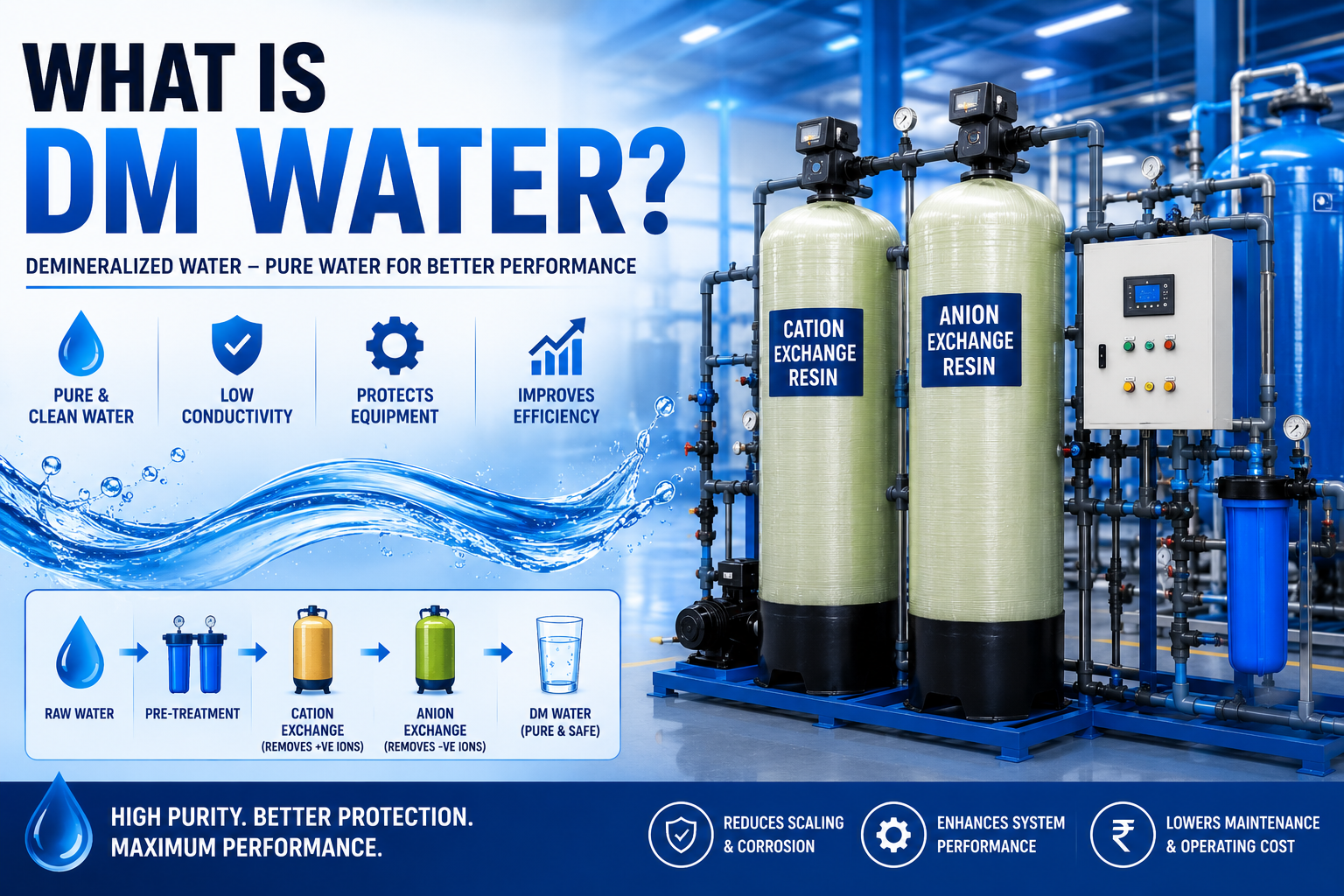
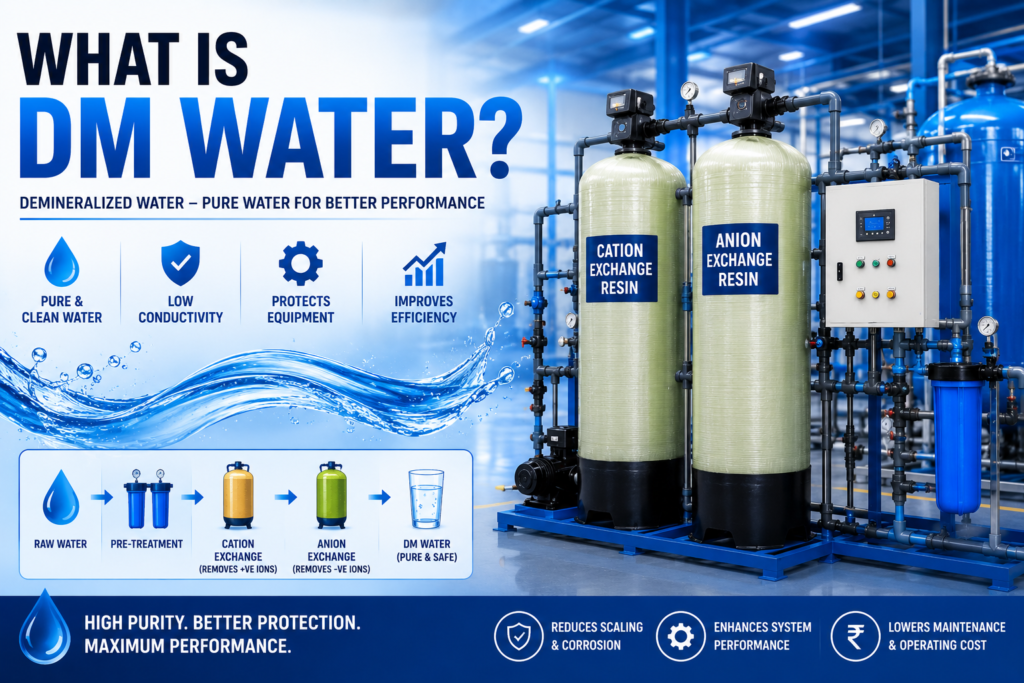
What is DM Water

DM Water Kaise Banta Hai?

DM Water generally Ion Exchange Process se banaya jata hai.

Is process me special resins use hote hain jo water ke andar present dissolved ions ko remove kar dete hain.

Usually DM plant me do main resin systems use hote hain:

1. Cation Resin

Ye positive ions remove karta hai jaise:

  • calcium
  • magnesium
  • sodium

2. Anion Resin

Ye negative ions remove karta hai jaise:

  • chloride
  • sulphate
  • nitrate

In dono processes ke baad highly purified DM Water milta hai.


DM Water Ki Important Characteristics

DM Water normal water se kaafi different hota hai.

DM Water Features:

✅ Very low conductivity
✅ Low dissolved salts
✅ High purity level
✅ Scale formation kam
✅ Industrial applications ke liye suitable

Isi wajah se industries me iska use bahot common hai.

DM Water Kaha Use Hota Hai?

DM Water ka use mainly industrial applications me hota hai jaha high purity water required hota hai.


1. Boiler Feed Water

Boilers me hard water use karne se scaling aur corrosion ho sakta hai.

DM Water:

  • scale formation reduce karta hai
  • boiler efficiency improve karta hai
  • maintenance cost kam karta hai

Isi liye boiler industry me DM water bahot important hota hai.


2. Pharmaceutical Industry

Medicines aur pharma manufacturing me water purity bahot critical hoti hai.

DM Water contamination risk reduce karne me help karta hai.


3. Laboratory Use

Labs me accurate testing aur experiments ke liye impurity-free water required hota hai.

Isliye laboratories me DM water commonly use hota hai.


4. Battery Industry

Battery manufacturing aur maintenance me bhi DM water ka use hota hai.

Mineral-free water battery performance improve karne me help karta hai.


5. Chemical Processing Plants

Kai industrial chemical processes me high purity water requirement hoti hai.

DM Water process efficiency aur product quality improve karta hai.

Kya DM Water Drinking Ke Liye Safe Hai?

Ye ek bahot common question hai.

Technically DM Water highly purified hota hai, lekin regular drinking purpose ke liye generally recommend nahi kiya jata.

Reason?
Kyuki DM process almost saare minerals remove kar deta hai.

Drinking water me controlled minerals hona important hota hai.

Isi liye normal drinking applications me RO water zyada commonly use hota hai.


DM Water Aur RO Water Me Difference

Bahot log DM Water aur RO Water ko same samajhte hain, lekin dono different hote hain.

RO Water:

  • membrane filtration use karta hai
  • TDS reduce karta hai
  • drinking applications me common hai

DM Water:

  • ion exchange process use karta hai
  • almost complete mineral removal karta hai
  • industrial high-purity applications me use hota hai

Kai industries me pehle RO aur fir DM treatment bhi use kiya jata hai better purification ke liye.


DM Plant Maintenance Kyu Important Hai?

Agar DM plant properly maintain na ho toh:

  • water purity affect ho sakti hai
  • resin efficiency reduce ho sakti hai
  • operating cost increase ho sakta hai

Isi liye:
✅ regular water testing
✅ resin maintenance
✅ proper regeneration
✅ quality treatment chemicals

bahot important hote hain.


Common Problems In DM Water Systems

1. High Conductivity

Generally exhausted resin ya improper regeneration ki wajah se hota hai.


2. Resin Fouling

Contaminated feed water resin performance ko affect kar sakta hai.


3. Scaling & Iron Fouling

Poor pre-treatment ki wajah se deposits develop ho sakte hain.

DM Water System Me Pre-Treatment Kyu Important Hai?

DM plant ke pehle proper pre-treatment hona bahot important hota hai.

Generally use hota hai:

  • sand filter
  • activated carbon filter
  • softener
  • RO system

Ye systems DM resin ko protect karte hain aur plant life improve karte hain.


Final Thoughts

DM Water ek highly purified water form hai jo industrial applications me bahot important role play karta hai.

Boilers, laboratories, pharma aur chemical industries me DM Water ka use better performance aur high purity maintain karne ke liye kiya jata hai.

Proper:
✅ pre-treatment
✅ maintenance
✅ water testing
✅ chemical treatment

ki help se DM plant efficiency aur water quality dono improve ki ja sakti hain.

Agar aap industrial water treatment aur DM plant solutions search kar rahe hain, toh Bluewello reliable water treatment solutions provide karta hai.

FAQ

Q1. DM Water ka full form kya hota hai?

DM Water ka full form Demineralized Water hota hai.

Q2. Kya DM Water aur RO Water same hote hain?

Nahi, dono purification methods aur applications different hote hain.

Q3. DM Water kaha use hota hai?

Boilers, laboratories, pharmaceuticals aur battery industries me commonly use hota hai.

Q4. Kya DM Water drinking ke liye suitable hai?

Generally regular drinking purpose ke liye recommend nahi kiya jata.

Q5. DM Water me minerals hote hain?

DM process me most dissolved minerals remove kar diye jate hain.

Water treatment industry me “DM Water” aur “RO Water” ye dono terms bahot commonly use hoti hain. Lekin bahot log abhi bhi confuse hote hain ki in dono me actual difference kya hota hai.

Kya DM Water aur RO Water same hote hain?
Kya dono ka TDS zero hota hai?
Aur industrial use ke liye kaunsa better hota hai?

Agar aap bhi in questions ka answer search kar rahe hain, toh ye blog aapke liye hai.

Is article me hum simple Hinglish me samjhenge:

  • DM Water kya hota hai
  • RO Water kya hota hai
  • In dono me kya difference hai
  • Industrial applications kya hain
  • Aur kaunsa water kis purpose ke liye best hota hai
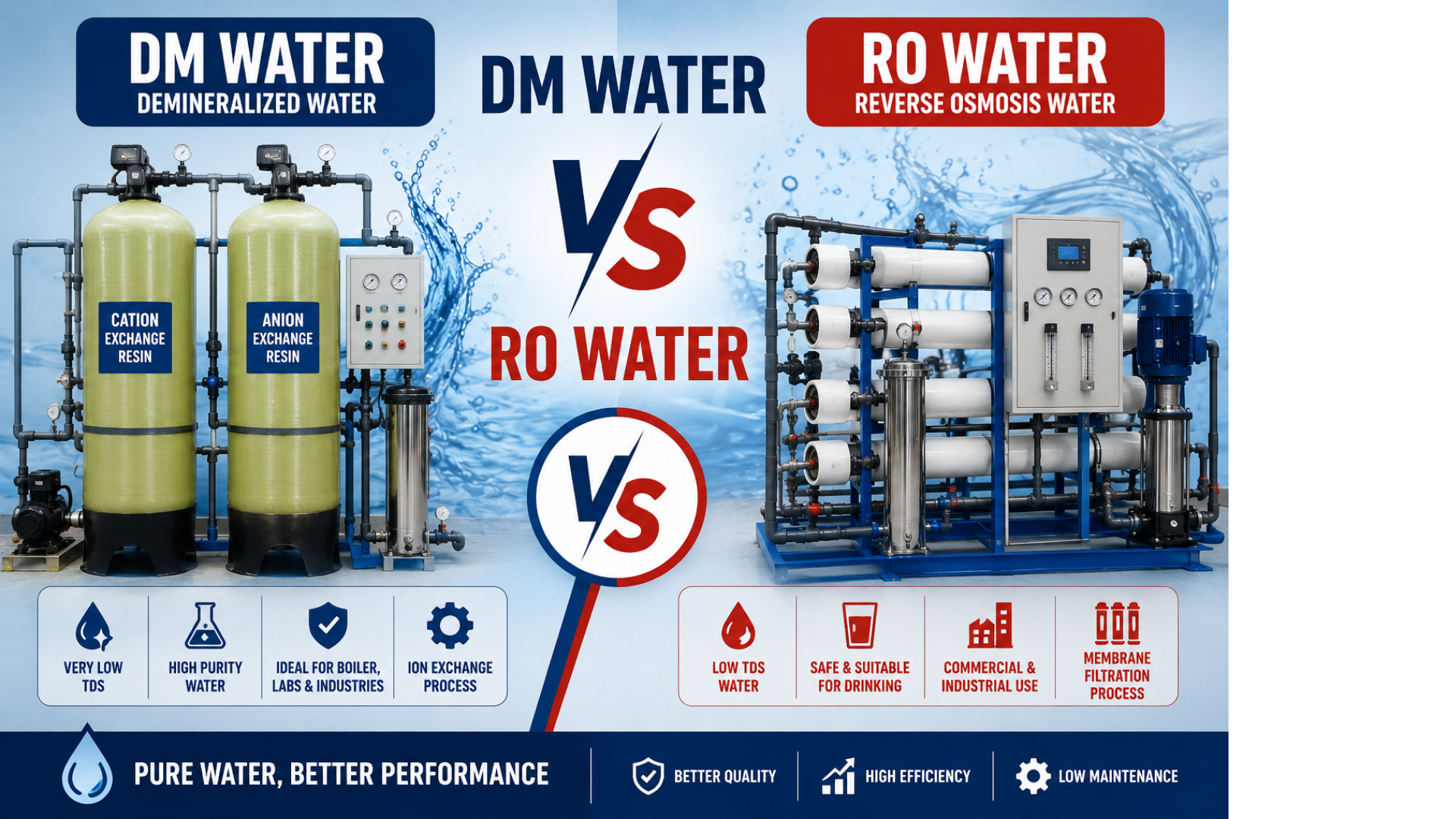
DM Water vs RO Water

DM Water Kya Hota Hai?

DM Water ka full form hota hai Demineralized Water.

Is water se almost saare dissolved minerals aur ions remove kar diye jate hain. DM water banane ke liye generally ion exchange process use hota hai.

Is process me special resins water ke andar present:

  • calcium
  • magnesium
  • sodium
  • chloride
  • sulphate

jaise ions ko remove kar dete hain.

Result me bahot low conductivity aur almost mineral-free water milta hai.

DM Water ki Characteristics:

✅ Very low conductivity
✅ Extremely low mineral content
✅ Industrial-grade purified water
✅ Boiler aur laboratory applications me commonly use hota hai


RO Water Kya Hota Hai?

RO Water ka matlab hota hai Reverse Osmosis Water.

RO system me water ko ek semi-permeable membrane ke through high pressure se pass kiya jata hai. Ye membrane:

  • dissolved salts
  • heavy metals
  • bacteria
  • impurities

ko remove karti hai.

RO process mainly TDS reduce karne ke liye use hota hai.

RO Water ki Characteristics:

✅ Low TDS water
✅ Better taste and odor
✅ Drinking purpose ke liye suitable
✅ Commercial aur industrial dono applications me use hota hai

DM Water vs RO Water: Main Difference

Ab sabse important question — in dono me actual difference kya hai?

1. Purification Process

DM Water:

Ion exchange resin technology use hoti hai.

RO Water:

Semi-permeable membrane filtration use hota hai.


2. Mineral Removal Capacity

DM Water:

Almost saare ions completely remove ho jate hain.

RO Water:

Most dissolved salts remove hote hain, lekin completely zero minerals hona zaruri nahi hota.


3. Conductivity

DM Water:

Very low conductivity hoti hai.

RO Water:

DM water se comparatively higher conductivity hoti hai.


4. TDS Level

DM Water:

TDS almost zero ke close ho sakta hai.

RO Water:

Low TDS hota hai, but completely zero nahi hota.


5. Applications

DM Water Uses:

  • Boiler feed water
  • Laboratory use
  • Pharmaceutical industry
  • Battery manufacturing
  • Chemical processing

RO Water Uses:

  • Drinking water
  • Commercial RO plants
  • Food industry
  • Hotels & restaurants
  • Industrial pre-treatment

Kya DM Water Drinking Ke Liye Safe Hai?

Technically DM water highly purified hota hai, lekin regular drinking purpose ke liye generally recommend nahi kiya jata.

Reason?
Kyuki isme essential minerals bhi remove ho jate hain.

RO water drinking purpose ke liye zyada commonly use hota hai because usme controlled mineral balance maintain kiya ja sakta hai.


Industrial Applications Me Kaunsa Better Hai?

Ye completely application par depend karta hai.

DM Water Best Hai:

  • High purity requirement
  • Boiler systems
  • Labs
  • Pharmaceuticals

RO Water Best Hai:

  • General water purification
  • Drinking water plants
  • Commercial usage
  • Industrial pre-treatment

Kai industries me pehle RO system aur uske baad DM plant use kiya jata hai taki ultra-pure water achieve kiya ja sake.

Kya RO Water Ko DM Water Banaya Ja Sakta Hai?

Haan, bahot baar industries me RO water ko further DM treatment diya jata hai.

Isse:

  • resin life improve hoti hai
  • operating cost reduce hoti hai
  • better purification achieve hoti hai

Isi wajah se RO + DM combination industrial water treatment me bahot popular hai.


DM Plant Aur RO Plant Maintenance Kyu Important Hai?

Agar proper maintenance na ho toh:

  • water quality affect ho sakti hai
  • membranes choke ho sakti hain
  • resins damage ho sakte hain
  • operating cost increase ho sakta hai

Isliye:
✅ Proper chemical dosing
✅ Timely cleaning
✅ Water testing
✅ Quality treatment chemicals

bahot important hote hain.

Final Thoughts

DM Water aur RO Water dono hi water purification ke important forms hain, lekin inka purpose alag hota hai.

Agar aapko:

  • ultra-pure industrial water chahiye → DM Water better hai
  • drinking ya commercial purified water chahiye → RO Water suitable hai

Right system choose karna completely aapki application aur water quality requirement par depend karta hai.

Agar aap industrial water treatment, RO chemicals ya plant maintenance solutions search kar rahe hain, toh Bluewello aapko reliable water treatment solutions provide kar sakta hai.

FAQ

Q1. Kya DM Water aur Distilled Water same hote hain?

Nahi, dono purification methods different hote hain. Distilled water evaporation process se banta hai, jabki DM water ion exchange process se.

Q2. Kya RO water completely pure hota hai?

RO water highly purified hota hai, lekin DM water jitna ultra-pure zaruri nahi hota.

Q3. Kya DM water battery me use hota hai?

Haan, DM water battery applications me commonly use hota hai.

Q4. Kya RO aur DM system saath me use kiye ja sakte hain?

Haan, industrial plants me RO + DM combination bahot common hai.

Sign Up Newsletter

Sign up our newsletter and save 25% off for the next purchase!

Subscribe to our newsletters and don’t miss new arrivals, the latest fashion updates and our promotions.